
Blepharitis is a chronic inflammation along the eyelid margins that affects lash roots and glands. It usually affects both eyes, causing persistent redness, swelling, and scaliness of the eyelids. Oil glands become clogged, or bacteria overgrow, disrupting normal lid health over time. Adults are most often affected due to skin conditions or poor hygiene habits.
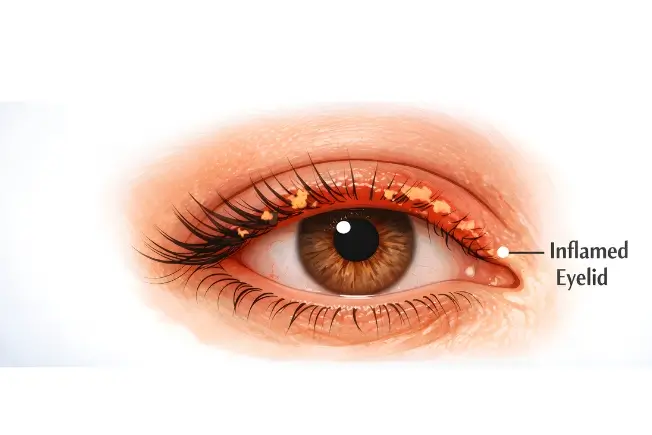
Children may occasionally get it from allergies or demodex mites. In India, dandruff and pollution increase cases among urban workers daily. Home remedies help control symptoms, but a complete cure remains rare in the long term. Delhi eye centers treat thousands each year with hygiene kits and eye drops.
There are several types of Blepharitis but the below are the common types:
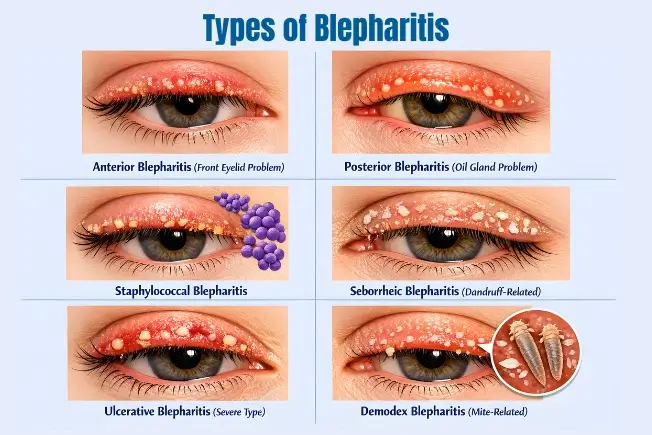
This type affects the outer edge of the eyelid, where your eyelashes grow.
This type affects the inner part of the eyelid, where oil glands are present.
This is caused by a bacterial infection (Staphylococcus).
This is linked to dandruff on the scalp or eyebrows.
This is a more serious and painful form.
This type is caused by tiny mites (Demodex) living in hair follicles.
Eye irritation and eyelid inflammation can cause persistent discomfort throughout the day. Recognizing the common symptoms early can help in seeking timely care.
The diagnosis of Blepharitis is based on clinical observation and simple diagnostic procedures that allow the doctor to determine the exact cause of eyelid inflammation. Since blepharitis may be associated with bacteria, mites, gland dysfunction, or instability of the tear film, ophthalmologists use several specific procedures to observe the ocular surface and eyelids in more detail.
A Slit Lamp Examination is one of the most vital instruments employed in the diagnostic process. It is a special microscope that enlarges the eyelids, lashes, and the surface of the eye. Using this equipment, physicians can clearly see crusting on the lash line, cylindrical dandruff-like collarettes, redness of the eyelid margin, and abnormalities of the openings of the meibomian glands. The magnification is so great that faint traces of inflammation may be visible, which might not be seen in a normal eye examination.
If mite infestation is suspected, the doctor may remove a few eyelashes and examine them under a microscope. This procedure, known as lash epilation microscopy, helps detect the presence of Demodex mites.
These microscopic parasites can inhabit hair follicles and oil glands along the eyelid margin. Under magnification, they may appear attached to or moving within the lash follicle. Their presence helps confirm Demodex blepharitis, a form of eyelid inflammation associated with mite infestation.
The best treatment of Blepharitis for your condition would be suggested by an eye specialist after examining your eyes. The following are the treatment options that may be followed:

Preventing blepharitis starts with healthy daily habits. Follow these steps to protect your eyelids.

Doctors at Save Sight Centre specialize in managing the full spectrum of Blepharitis, including anterior, posterior, and mixed forms. Care begins with a detailed eyelid examination to identify the underlying cause of inflammation.
Patients are also guided through eyelid hygiene workshops that teach lifelong care routines to help prevent future flare-ups at home. Because urban pollution can aggravate eye irritation, protective measures such as shield goggles and lubricating eye drops are recommended—particularly for daily commuters in Delhi.
Bacteria, demodex mites, and meibomian dysfunction most often cause blepharitis by chronically clogging glands. Dandruff and rosacea increase the risk of flaking, irritating the lids further.
Symptoms of blepharitis are significantly reduced with warm scrubs at home daily. Difficult cases require an IPL and professional recommendation as well.
The cost of treating Blepharitis can vary widely depending on the severity of the condition and the type of treatment required. In many clinics, treatment costs typically range from ₹5,000 to ₹50,000.
Blepharitis leads to dry eyes, as the oil layer is blocked, and tears evaporate quickly. Treat lids restore film-quality vision and sharpen naturally.
Demodex is common in 30 percent of blepharitis cases in India, which is often underdiagnosed. Tea tree wipes clear mite symptoms reliably within weeks.
Copyright © 2025 | Save Sight Centre | All Rights Reserved.