
 +91-9210-914-391
 WhatsApp

 Book Appointment
Lacrimation Disorder (Watery Eyes): Causes, Symptoms & Treatment
Tears are supposed to protect and lubricate your eyes — not run down your cheeks throughout the day. When your eyes constantly water, it usually means something in the delicate balance between tear production and tear drainage has gone off track. Here's what's actually behind it, and how it's properly diagnosed and treated.

Quick Answer
A lacrimation disorder — medically called epiphora — happens when your eyes produce too many tears, or when tears can't drain away properly through the tear ducts, causing constant watering or overflow. Common causes include allergies, dry eye (which paradoxically triggers watery reflex tears), a narrowed or blocked tear duct, eyelid malposition, or infection of the tear sac. Treatment depends entirely on the cause — mild cases often improve with drops and warm compresses, while structural blockages may need in-office probing or, for persistent cases, DCR surgery to create a new permanent drainage channel.
Key Takeaways
- Watery eyes result from either too many tears being produced, or tears not draining away properly — sometimes both.
- Dry eye is a surprisingly common cause, since a dry surface can trigger reflex overproduction of watery tears.
- About 6% of newborns have a blocked tear duct at birth; most resolve on their own within the first year.
- Persistent, one-sided watering with unusual discharge is rare but occasionally signals something more serious and needs proper evaluation.
- Diagnosis relies on specific tests — dye disappearance testing, probing, and imaging — to pinpoint exactly where the problem lies.
- Treatment ranges from simple drops and lid hygiene to probing, balloon dilation, or DCR surgery for lasting relief.
Figures reflect general clinical research and can vary; a proper eye exam is needed to identify your specific cause.
What Is a Lacrimation Disorder?
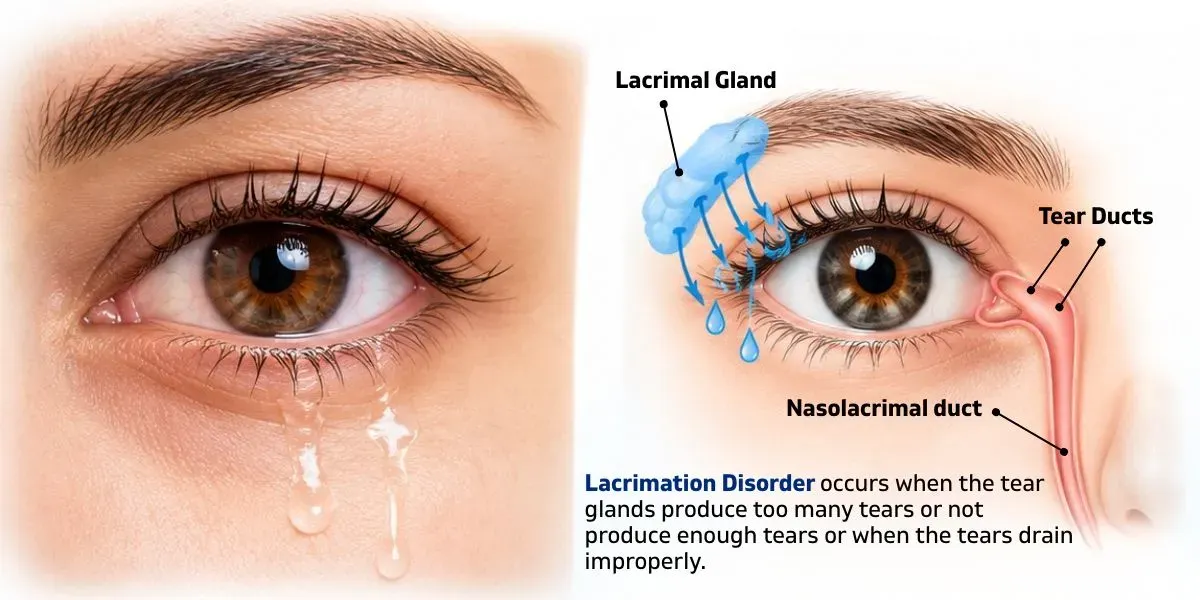
A lacrimation disorder refers to a problem with how your eyes produce or drain tears, most often showing up as constant watery eyes — a condition doctors call epiphora. To understand why this happens, it helps to know how tears normally travel: they form on the eye's surface, then drain through tiny openings called puncta at the inner corners of your eyelids, pass through small channels called canaliculi, collect briefly in the lacrimal sac, and finally exit through the nasolacrimal duct into your nose (which is exactly why crying often makes your nose run too). A lacrimation disorder means this system is either producing too many tears for the drainage system to handle, or a blockage somewhere along this pathway is preventing normal drainage.
What Are the Types of Lacrimation Disorders?
Hyperlacrimation (Overproduction)
The tear glands produce more tears than usual, often triggered by irritants like onion fumes, wind, or bright light. When production outpaces what the drainage system can handle, tears overflow.
Drainage Obstruction (Blocked Tear Duct)
Tears fail to drain normally and spill down the face instead. In infants, this is usually congenital nasolacrimal duct obstruction; in adults, it can develop gradually from inflammation, scarring, or ageing.
Punctal Stenosis
A narrowing right at the tiny drainage opening (punctum) on the eyelid itself, often from chronic inflammation or ageing, which restricts how much tear fluid can enter the drainage system at all.
Dacryocystitis
An infection of the tear sac, usually occurring when stagnant, poorly draining tears allow bacteria to multiply — a painful condition that needs prompt antibiotic treatment.
Eyelid Malposition (Ectropion or Entropion)
Ectropion causes the lower lid to turn outward, pulling the drainage opening away from the tear film. Entropion turns the lid inward instead, which can also disrupt normal tear collection and cause irritation from lashes rubbing the eye.
Reflex Tearing
Often mistakenly linked to having "too many" tears, this is actually the eye's response to surface dryness or irritation — the tears produced this way are thin and watery, without the balanced lubricating layers of normal tears.
What Are the Symptoms of Lacrimation Disorder?
Beyond these core symptoms, you might notice sticky eyelids after sleep, recurring swelling near the inner corner of the eye or bridge of the nose (a sign of possible tear sac involvement), soreness on the cheeks from frequent wiping, or symptoms that flare up during allergy season or in dusty, windy conditions. In babies, watch for irritated eyelashes and fussiness, especially during feeds.
What Causes Lacrimation Disorder?
Allergic Conjunctivitis
Allergens trigger histamine release, causing rapid swelling and irritation of the tear glands and surrounding tissue, leading to sudden watery, itchy eyes.
Bacterial Infection or Inflammation
Infections within the tear ducts cause swelling and can eventually lead to blockages, along with discharge and crusting.
Age-Related Changes
As we age, the muscles surrounding the eyes that help pump tears through the drainage system gradually weaken, slowing drainage even without an outright blockage.
Eyelid Malposition
When the eyelid turns outward or inward, tears aren't directed properly toward the drainage openings, so they spill over instead.
Foreign Body or Eye Injury
Dust, debris, or a scratch on the eye's surface triggers an immediate, protective flood of reflex tears.
Sinus Issues
Since the tear duct empties into the nasal cavity, sinus congestion or infection can indirectly affect drainage by putting pressure on the nasal opening.
Certain Eye Drops
Some medicated drops can dry out the eye's surface as a side effect, which paradoxically triggers a reflex watering response.
Trauma or Surgical Scarring
An injury or previous eye surgery can leave scar tissue in the delicate tear drainage passages, narrowing or blocking them permanently.
Is Watery Eyes the Same as Dry Eyes?
It sounds contradictory, but the two are often closely connected. When your eye's surface doesn't have enough consistent lubrication, it triggers a protective reflex, flooding the eye with watery tears in an attempt to compensate. The problem is that these reflex tears are thin and don't contain the same balanced layers as your normal tear film, so they don't actually fix the underlying dryness — they just spill over instead. This means persistent watering can, somewhat counterintuitively, be a sign of dry eye disease rather than too much of the right kind of tears. See our guide to dry eye treatment if this sounds familiar.
What Red Flags Need Immediate Attention?
Most watery eyes are manageable and not urgent, but treat these as needing prompt care:
- Watering with pus or thick discharge — a sign of infection needing antibiotic treatment
- Painful swelling near the inner corner of the eye — can indicate an abscess of the tear sac
- Sudden vision loss alongside overflow — needs urgent evaluation to rule out a corneal ulcer
- Persistent symptoms in infants past 12 months of age — worth an ophthalmology review if it hasn't resolved by then
- Red eyelids with fever — can indicate cellulitis, a genuine emergency
- Both eyes swelling suddenly — often points to an allergic or systemic reaction
Could Watery Eyes Be a Sign of Something More Serious?
In the vast majority of cases, no — allergies, mild dryness, or a straightforward duct narrowing account for most watery eyes. It's worth knowing, though, that persistent, one-sided watering, particularly when paired with blood-tinged discharge or a growing lump near the inner corner of the eye, can very occasionally be an early sign of a lacrimal sac tumour. These are rare, but they're also sometimes missed early on because their symptoms look so similar to routine causes of epiphora. This is exactly why unusual, one-sided, or non-resolving watering deserves a proper specialist evaluation rather than being written off indefinitely as "just allergies."
How Is Lacrimation Disorder Diagnosed?
Slit-Lamp Examination
A magnified view of the puncta and eyelids to check for inflammation, narrowing, or visible structural issues.
Fluorescein Dye Disappearance Test
A drop of dye is placed in the eye, and its clearance is timed — dye that lingers longer than it should points to a drainage problem.
Jones Dye Test
Traces whether dye reaches the nose as expected, helping confirm whether the tear sac and duct are functioning normally.
Saline Irrigation
Gently flushing fluid through the drainage system helps pinpoint the exact location of an obstruction.
Lacrimal Probing
A thin probe carefully checks the canal for resistance, done under local numbing for comfort.
Dacryocystography or CT Imaging
Contrast dye combined with X-ray or CT imaging identifies stones, strictures, or, rarely, tumours affecting the deeper drainage pathway.
Scintigraphy
Uses a small amount of radioactive tracer to measure how tears move dynamically through the system over time.
What Are the Best Treatment Options for Lacrimation Disorder?
Antihistamine Eye Drops
Calm allergy-driven overproduction of tears, typically bringing relief within days.
Antibiotics
Clear infections that are causing swelling, pus, or discomfort in or around the tear sac.
Warm Compresses
Soften crusting and gently encourage tear flow, often used as part of a nightly routine.
Punctal Plugs
Small devices that help retain natural tears on the eye's surface — useful specifically when dryness is contributing to reflex overwatering.
In-Office Probing
A quick, well-tolerated procedure that reopens blocked infant tear ducts, often resolving symptoms in one sitting.
Balloon Dilation
Gently widens a narrowed section of the tear duct without requiring full surgery.
DCR (Dacryocystorhinostomy) Surgery
Creates a new, permanent drainage channel that bypasses a severe or long-standing blockage — the definitive fix for persistent duct obstruction.
Eyelid Repositioning Surgery
Corrects ectropion or entropion, restoring the eyelid's normal position so tears can drain properly again.
How Common Is Lacrimation Disorder in Babies?
Congenital nasolacrimal duct obstruction affects an estimated 6% of newborns, making it one of the most common reasons infants have persistently watery, sometimes crusty eyes. The encouraging part is that most cases resolve on their own within the first year of life, as the duct naturally finishes opening — often helped along with simple lacrimal massage, which your doctor can teach you. If watering persists well beyond 12 months, in-office probing is a quick, well-established fix.
How Can You Reduce Your Risk of Lacrimation Disorder?
- Treat allergies promptly — early, consistent management of seasonal or environmental allergies prevents ongoing irritation to the tear glands
- Practice good eyelid hygiene — regular gentle cleaning helps prevent the inflammation that contributes to duct narrowing over time
- Avoid rubbing your eyes — frequent rubbing can worsen irritation and, over time, affect eyelid position
- Wear protective eyewear — sunglasses or safety glasses in dusty, windy, or high-pollution conditions reduce irritant exposure
- Get eye infections treated early — prompt treatment prevents scarring that can narrow the drainage pathway
- Manage dry eye proactively — treating underlying dryness helps break the reflex-tearing cycle before it becomes a persistent pattern
- Massage a suspected blocked duct in infants — as guided by your paediatric eye specialist, this can speed up natural resolution
What Specialist Care Is Available at Save Sight Centre?
Save Sight Centre diagnoses lacrimation disorders using dye tests and imaging to pinpoint the exact cause and location of the problem, rather than guessing. Paediatric cases, including suspected congenital duct blockages, are assessed by a team experienced in routine infant lacrimal evaluations. For adults, care spans allergy management through to surgical correction where needed. Given Delhi's seasonal pollution and allergy load, the team also offers guidance on protective measures and appropriate lubricating drops to reduce irritant-triggered watering. Clear post-procedure hygiene instructions help minimise the chance of recurrence.
Dr. Rajeev JainDirector · Retina, Cataract, LASIK & Uvea Specialist
"Watery eyes get dismissed far too often as a minor annoyance, but the cause can range from a simple allergy to a structural blockage that genuinely needs a procedure to fix. The only way to know which one you're dealing with is a proper lacrimal exam — not guesswork with over-the-counter drops that may not even be addressing the right problem."
Frequently Asked Questions About Lacrimation Disorder
In adults, allergic conjunctivitis and dry eye-related reflex tearing are among the most common causes, followed by age-related narrowing of the tear drainage ducts. In infants, congenital nasolacrimal duct obstruction — where the duct hasn't fully opened at birth — is the leading cause.
Mild cases linked to allergies or dryness often improve with the right eye drops, warm compresses, and lid hygiene within a matter of weeks. More persistent blockages may need in-office procedures like probing or balloon dilation, and severe or long-standing duct obstructions are usually resolved permanently with DCR (dacryocystorhinostomy) surgery.
Congenital nasolacrimal duct blockage affects an estimated 6% of newborns. The reassuring news is that the vast majority resolve on their own within the first year of life as the duct naturally finishes opening, often helped along with simple lacrimal massage at home.
They can be surprisingly connected, even though it sounds contradictory. When the eye's surface is too dry, it can trigger a protective reflex that floods the eye with watery, poorly lubricating tears — so persistent watering is sometimes actually a sign of an underlying dry eye problem rather than too much of the right kind of tears.
Most of the time, no — allergies, dryness, or a minor duct narrowing account for the large majority of cases. Rarely, however, persistent one-sided watering, especially with blood-tinged discharge or a growing lump near the inner corner of the eye, can be an early sign of a lacrimal sac tumour, which is why unusual or one-sided symptoms deserve a proper evaluation rather than being dismissed.
Punctal stenosis is a narrowing right at the tiny drainage opening on the eyelid itself, while a blocked tear duct (nasolacrimal duct obstruction) is further along the drainage pathway, closer to the nose. Both cause similar watering symptoms, but they're diagnosed and treated slightly differently, which is why a proper lacrimal exam matters.
Probing is typically tried first, especially in infants and for less severe blockages, since it's a quicker, less invasive in-office procedure. DCR (dacryocystorhinostomy) surgery is generally reserved for more complete or long-standing duct blockages, or cases where probing and dilation haven't given lasting relief, since it creates a new, permanent drainage channel.
Yes. Age-related weakening of the muscles that help pump tears through the drainage system, along with natural narrowing of the tear ducts over time, makes epiphora considerably more common in older adults compared to younger people.
On their own, allergies typically cause temporary, seasonal watering rather than a permanent structural problem, and usually respond well to anti-allergy drops and avoiding triggers. That said, chronic, poorly controlled allergic inflammation can occasionally contribute to narrowing of the tear drainage system over time, which is one more reason to get persistent allergy symptoms properly managed.
Cost varies widely depending on the cause and the treatment needed — simple drops and lid hygiene cost far less than an in-office probing procedure, which in turn costs less than DCR surgery. Your eye specialist can give you an accurate, personalised estimate once the underlying cause and the right treatment plan have been identified.
Tired of Constantly Watery Eyes?
Get an accurate diagnosis and lasting relief at Save Sight Centre, Adarsh Nagar, North Delhi. NABH & ISO accredited · 15+ years · 1,70,000+ patients treated.
Disclaimer: The information on this site should not be considered medical advice. Please consult a doctor for determining the best procedure as well as the most appropriate treatment for your eyes. Results may vary from person to person and we do not guarantee similar results for everyone.