
Phacoemulsification, or phaco, is a contemporary cataract operation which involves the utilisation of ultrasonic energy to remove the opaque natural lens into small pieces of a whole. Those are then suctioned very softly and with a very small hole. After removing the cataract, a clear intraocular lens (IOL) is inserted in its original position to give a person clear vision.
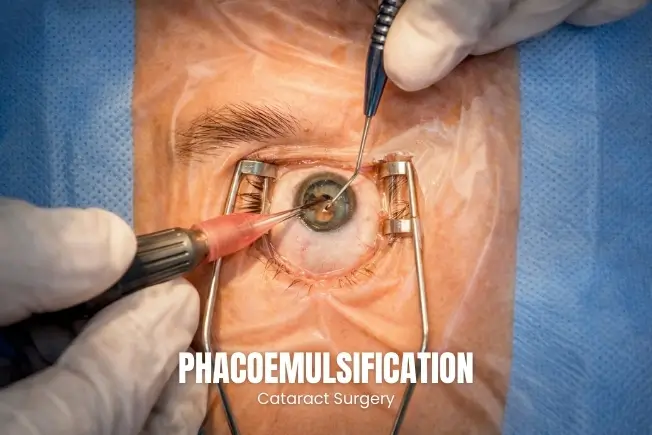
Since the incision is minimal, phacoemulsification is normally performed without a stitch, which results in minimal pain and a faster recovery as compared to the older cataract surgeries. It is the most common practice in the majority of sophisticated eye centres today.
The process is very simple and quick. The common cataract surgeries follows the below steps:
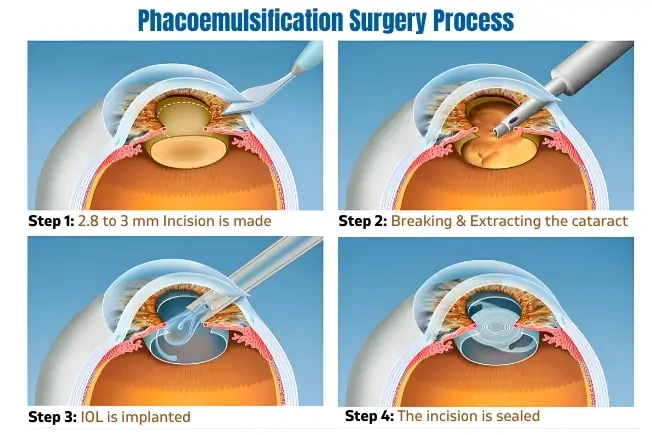
The surgeon makes a very small hole, on the periphery of the clear cornea, 2.8–3 mm. Through this micro-incision, tiny tools are inserted, and the procedure proceeds without disrupting the natural shape.
A thin ultrasonic probe in the form of a pen is inserted through the incision. Its vibrations are very high, and cut the hard cataract to minute particles, which are instantly sucked. A salt solution in equilibrium maintains the shape of the eyes, cools the probe, and cleanses particles from the eyes.
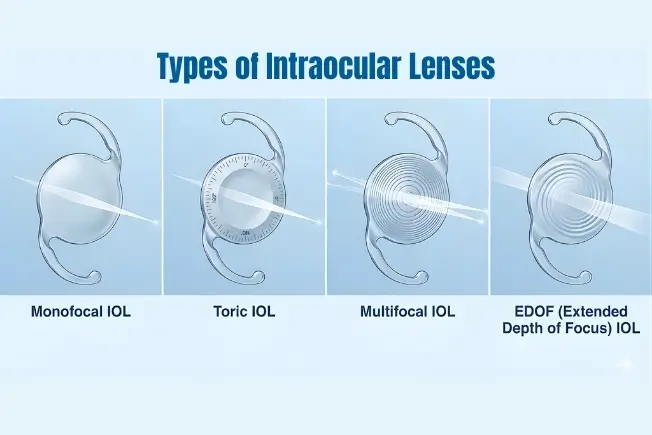
Once the cataract has been extracted, a foldable artificial lens is placed, using the same incision and unfolded within the leftover capsule. The intraocular lens remains permanently, and it fulfils the role of the natural lens by focusing.
The precise, small cut is self-healing most of the time. A guard or patch can remain temporarily in place. Instructions and the eye drops are given, and you can walk out with them the same day.
Phacoemulsification has become the preferred method for cataract removal because of several important advantages:

The majority of individuals requiring cataract surgery today are those who are appropriate for phacoemulsification. This will be checked after a thorough examination, which will probably involve:
Phacoemulsification can often be safely performed even on patients with diabetes, controlled glaucoma, or other stable eye conditions, although the technique is tailor-made to individual patients.
Cataract surgery is also regularly done at Save Sight Centre in Delhi through advanced phacoemulsification and Micro-Incision Cataract Surgery (MICS). Such procedures involve extremely tiny self-sealing incisions, which allow you to heal more quickly with better and more stable vision.
The cataract team has the latest phacoemulsification machines and microscopes that are used to safely and accurately remove the cataracts. Our team is also very understanding and works with the patients, keeping in mind their needs:
From the initial meeting with our surgeons up to the follow-up, we ensure that our surgeons guide you through the entire process of phacoemulsification using easy-to-understand terminology to ensure that you and your family are informed and comfortable.
No. The eye is desensitised using anaesthetic drops or local anaesthesia, and thus one will not painfully experience anything. The procedure can be accompanied by some mild pressure or a slight feeling of movement.
The operation is not long-lasting- an average surgeon can take 10-20 minutes to operate on each eye. On the day of surgery, you will be allowed to spend a few hours in the hospital or in the clinic being prepared and observed.
In most of the patients, improvement in vision can be seen in 24 to 72 hours. Vision may require days to weeks to stabilise. Reading, screen activities, and outdoor activities are gradually resumed according to the recommendation of your surgeon.
Every surgery is associated with minor risks, including infection, inflammation, swelling of the cornea, or subsequent opacification of the capsule. There are not many serious complications, in particular, when the procedure is carried out by a skilled surgeon and the instructions are followed after the operation.
Phacoemulsification has apparent benefits to the majority of patients; smaller incisions, quicker healing, reduced suture, and more accurate placement of the intraocular lens than the older methods with large incisions. Depending on the state of your eyes and your health condition, your doctor will prescribe the most appropriate method.
Copyright © 2025 | Save Sight Centre | All Rights Reserved.