
 +91-9210-914-391
 WhatsApp

 Book Appointment
Best Intraocular Lens (IOL) for Cataract Surgery: Complete Guide
Choosing an IOL is one of the biggest decisions in modern cataract surgery — it doesn't just clear away the cataract, it can also reshape how much you rely on glasses for the rest of your life. There's no single "best" lens for everyone; the right one depends entirely on your eyes, your daily habits, and how you feel about wearing glasses. Here's everything you need to know to have that conversation with confidence.

Quick Answer
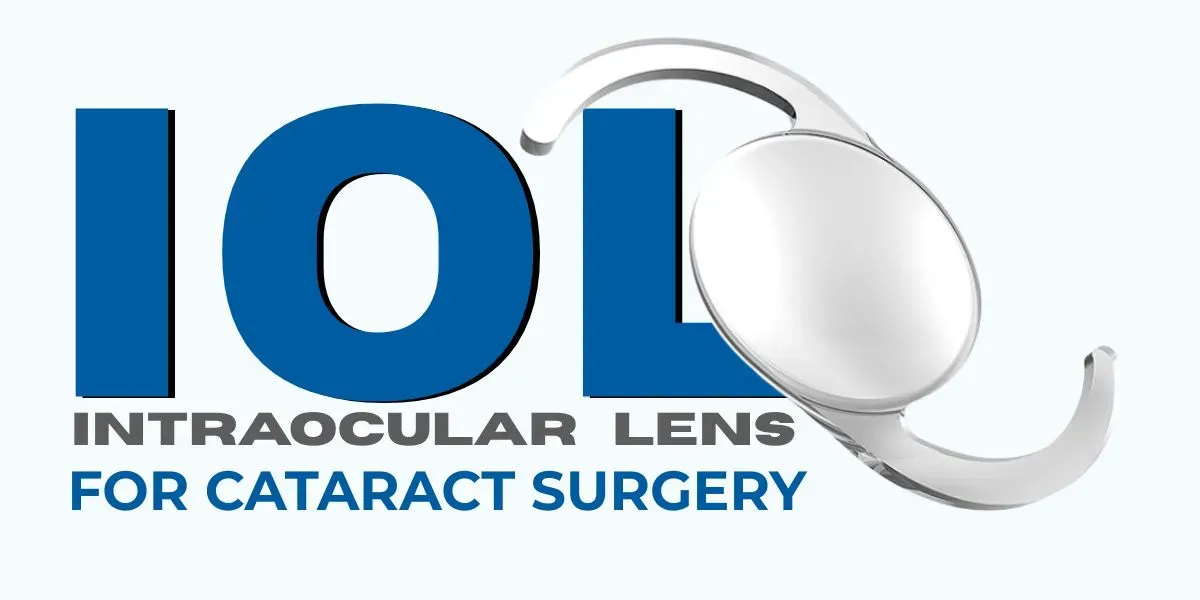
An intraocular lens (IOL) is a tiny, permanent artificial lens implanted during cataract surgery to replace your eye's clouded natural lens. The five main types are monofocal (clear vision at one distance, the most common and affordable), toric (corrects astigmatism), multifocal/trifocal (near, intermediate and distance vision, most spectacle independence), EDOF (a continuous focus range with fewer halos than multifocal), and accommodating (shifts inside the eye to mimic natural focusing). There's no universal "best" lens — the right choice depends on your lifestyle, eye health, tolerance for glare or halos, and budget, decided together with your surgeon.
Key Takeaways
- Modern IOLs are foldable, biocompatible, and designed to last a lifetime without maintenance or replacement.
- Monofocal lenses give the sharpest distance vision with the fewest visual side effects and are the most affordable, insurance-friendly option.
- Toric lenses correct astigmatism and can be combined with any other IOL type.
- Multifocal, trifocal, and EDOF lenses reduce glasses dependence but carry a higher chance of halos or glare, especially at night.
- Monovision is a technique — not a lens type — that sets one eye for distance and one for near using standard lenses.
- Cataract surgery today is both a cataract-removal and a refractive procedure, meaning your glasses prescription can often improve at the same time.
Figures reflect general clinical patterns and can vary based on individual eye health and lens choice.
What Is an Intraocular Lens (IOL)?
An intraocular lens is a tiny, clear artificial lens implanted into your eye during cataract surgery, replacing your eye's natural lens once it has become cloudy. It's made from biocompatible material, so it can remain in the eye permanently with no maintenance and typically no risk of rejection. Cataract surgery today isn't just about removing the cataract — it's also a refractive procedure. Along with clearing the clouding, your surgeon can correct your underlying glasses prescription at the same time, which is why choosing the right IOL matters so much for your quality of vision afterward.
What Materials Are IOLs Made Of?
Since intraocular lenses were first introduced, the materials used have evolved considerably, moving from rigid to soft, foldable designs that allow much smaller incisions and faster healing.
Hydrophobic acrylic, hydrophilic acrylic, and silicone are all soft, foldable materials, which means the lens can be rolled up and inserted through a very small incision, then unfolds gently inside the eye. Older rigid lenses were made from PMMA (polymethyl methacrylate) and needed a larger incision, which has largely been replaced by modern foldable options. Some lenses also include a built-in UV filter, and certain designs add a yellow-tinted filter intended to reduce blue light reaching the retina, similar to the eye's natural lens before a cataract develops.
What Are the Main Types of Intraocular Lenses?
Monofocal IOLs
Most CommonMonofocal IOLs give clear vision at a single distance, usually set for far vision (driving, TV, walking outdoors). Glasses will typically still be needed for reading and close work like using your phone, reading, or sewing.
Good if: you're comfortable using glasses for near work and want the sharpest distance vision with the fewest visual side effects. Also the most affordable option and commonly covered by insurance.
Toric IOLs
For AstigmatismToric IOLs correct cylindrical power (astigmatism), which occurs when the cornea or lens has an irregular, egg-like shape rather than being perfectly round. Left uncorrected, your vision won't be fully clear even after standard cataract surgery. Toric lenses can be combined with any other IOL type on this list.
Good if: you have moderate to significant astigmatism and want to reduce or remove your dependence on distance glasses.
Multifocal / Trifocal IOLs
Most Spectacle-FreeMultifocal and trifocal IOLs split light into multiple focus points, giving functional vision at distance, intermediate, and near (trifocal), or distance and near (multifocal). Many patients report being glasses-free for around 95% of daily activities. Some people notice halos or glare around lights at night, especially early on, which the brain typically adapts to over time.
Good if: you read, use a smartphone, or do close office work often, and want maximum freedom from both distance and reading glasses.
EDOF (Extended Depth of Focus) IOLs
Fewer HalosEDOF technology creates one continuous, elongated focus range rather than the discrete distance-and-near steps of a multifocal lens. This gives excellent distance and intermediate vision (computer, dashboard, TV) and better near vision than a simple monofocal lens, generally with fewer halos and less glare than multifocal designs.
Good if: you want strong distance and computer vision and are comfortable using light reading glasses for very fine or prolonged near work.
Accommodating IOLs
Newer TechnologyAccommodating IOLs are designed to shift position slightly inside the eye in response to your natural eye muscles, aiming to mimic how a youthful lens focuses. This can offer smoother transitions between distances, though near vision is generally not as strong as with multifocal or trifocal lenses.
Good if: you want a more natural focusing experience and are willing to accept a more modest boost to near vision in exchange for smooth, glare-free transitions.
What Is Monovision, and Is It a Type of IOL?
Monovision isn't actually a lens type — it's a technique. With this approach, a monofocal or EDOF lens is set to correct one eye for distance vision and the other eye for near vision, and your brain gradually learns to favour whichever eye suits the task at hand. It can meaningfully reduce glasses dependence without the halos sometimes associated with multifocal lenses, but it requires a short adaptation period, and not everyone tolerates the slight imbalance between eyes well. Many surgeons offer a contact lens trial of monovision before committing to it surgically, so you can test how it feels first.
What Does "Aspheric" Mean, and Why Does It Matter?
An aspheric IOL has a lens surface shaped to reduce spherical aberration — a subtle optical distortion that can reduce contrast and sharpness, particularly in dim light. Aspheric designs are often preferred by people who drive frequently at night, since they tend to provide better contrast sensitivity with less glare and haloing around headlights and streetlights. Most modern monofocal, toric, multifocal, and EDOF lenses are now available in aspheric versions, so this is usually a design refinement layered onto your chosen lens type rather than a separate category to choose between.
Which IOL Fits Your Lifestyle?
| Your Priority | Lenses Worth Discussing |
|---|---|
| Frequent night driving | Monofocal or aspheric monofocal |
| Heavy reading, screens, close work | Multifocal, Trifocal, or EDOF |
| Significant astigmatism | Toric (combinable with any type above) |
| Smoothest, most natural focus shift | Accommodating |
| Budget-conscious, insurance-covered | Standard monofocal |
| Maximum spectacle independence | Multifocal/Trifocal, or monovision with monofocal/EDOF |
How Do You Decide Which IOL Is Best for You?
There is no single "best" IOL for all patients — the right choice depends on:
- Your everyday habits (reading, night driving, computer work, outdoor hobbies)
- How strongly you want to be free of glasses, for near or distance vision
- Whether you have astigmatism, other eye conditions (like macular problems or glaucoma), or previous eye surgery (LASIK or retina surgery)
- Your personal tolerance for glare or halos, which some premium lenses carry more of than others
- Your budget, since premium lenses involve additional cost beyond standard cataract surgery
Common patterns your doctor may suggest: a standard monofocal IOL if you're comfortable using reading glasses and want the sharpest distance vision with minimal side effects; a toric monofocal IOL if you have significant astigmatism and want clear, glasses-free distance vision; and a multifocal, trifocal, or EDOF IOL if you want more freedom from glasses across most activities and have generally healthy eyes.
How Much Do IOLs Cost?
Standard monofocal IOLs are typically included within routine cataract surgery packages and are commonly covered by insurance, since they represent the established medical standard of care. Premium lenses — toric, multifocal, trifocal, EDOF, and accommodating IOLs — usually involve additional out-of-pocket cost on top of the base surgery, which varies depending on the specific lens brand and technology, your surgeon's expertise, and the hospital's facilities. During your consultation, your surgeon will walk you through the cost difference for each option relevant to your eyes, so you can weigh it against the visual outcome you're hoping for.
How Does Save Sight Centre Help You Choose the Right IOL?
At Save Sight Centre, cataract surgery is performed using the most modern methods, including phacoemulsification and Micro-Incision Cataract Surgery (MICS), both using small incisions that heal quickly and support better visual outcomes. The right IOL is implanted in the same procedure, and that choice plays a major role in your quality of vision afterward.
The team takes time to understand your age, work profile, and hobbies; whether you drive often at night, use a computer for long hours, or read frequently; and how comfortable you are with using glasses for some tasks versus wanting maximum independence from them. Ophthalmologists at Save Sight Centre walk you through the differences between monofocal, toric, multifocal, EDOF, and accommodating lenses, including likely visual outcomes and costs for each. With years of experience across thousands of cataract procedures and NABH accreditation, the focus stays on matching an IOL to your lifestyle and eye health — not simply recommending the most premium option available.
Tip: Bring a short list of your daily habits to your consultation — how often you drive at night, read, or work on screens — since these details genuinely shape which lens will suit you best.
Dr. Rajeev JainDirector · Retina, Cataract, LASIK & Uvea Specialist
"Patients often come in assuming the most expensive lens must be the best one for them, and I always push back gently on that idea. A frequent night driver with healthy eyes might genuinely see better long-term satisfaction with a well-chosen monofocal lens than a premium multifocal one. The best IOL is the one that matches how you actually live — not the one with the most features on paper."
Frequently Asked Questions About Intraocular Lenses (IOLs)
There is no single "best" IOL for everyone. The ideal lens depends on your eye condition, lifestyle, and vision goals. Monofocal, multifocal, toric, EDOF, and accommodating lenses each serve different needs, so the best choice is personalised after a proper eye evaluation.
The main types are: Monofocal IOL (clear vision at one distance, usually far), Multifocal/Trifocal IOL (helps with near, intermediate and distance vision), Toric IOL (corrects astigmatism), EDOF (provides a continuous range of vision), and Accommodating IOL (shifts inside the eye to mimic natural focusing). Each is chosen based on your specific vision needs.
Premium IOLs like multifocal, trifocal, and EDOF lenses can significantly reduce dependence on glasses, especially for daily activities. However, you may still need glasses for very fine print, prolonged reading, or low-light conditions.
Yes, if you have astigmatism, a toric IOL can correct it during cataract surgery. This can help you achieve clearer distance vision and reduce the need for glasses after surgery.
Premium IOLs are widely used and considered safe when selected appropriately and implanted by an experienced surgeon. Some patients may notice halos or glare initially, but these usually reduce over time as the brain adapts.
The right IOL is chosen based on your daily activities (reading, driving, screen use), your dependence on glasses, your eye health and medical condition, and your budget. A detailed consultation with your eye specialist helps determine the most suitable option.
Intraocular lenses are permanent and designed to last a lifetime. They do not wear out or need replacement in most cases.
Cataract surgery is usually painless and quick, performed under local anaesthesia. Most patients experience only mild discomfort, if any.
Most people notice improved vision within a few days, with complete healing typically taking 2-4 weeks. Your doctor will guide you on post-surgery care.
Some patients may experience halos or glare (especially at night), mild discomfort or dryness, and temporary blurred vision. These effects are usually temporary and improve over time.
Accommodating IOLs are designed to shift position slightly inside the eye in response to your eye muscles, mimicking the way a natural, youthful lens focuses. This can give smoother transitions between distances than a fixed monofocal lens, though they generally don't restore near vision as strongly as multifocal or trifocal lenses do.
Monovision isn't a lens type — it's an approach where a monofocal or EDOF lens is set for distance vision in one eye and for near vision in the other, so your brain learns to use each eye for a different task. It can reduce glasses dependence without the halos sometimes seen with multifocal lenses, but it requires a short adaptation period and isn't suited to everyone.
Monofocal IOLs are typically included in standard cataract surgery packages and are commonly covered by insurance, since they're considered the medically standard option. Premium lenses like toric, multifocal, trifocal, EDOF, and accommodating IOLs usually involve additional out-of-pocket cost, which varies based on the lens brand, technology, and your surgeon's expertise.
Modern IOLs are typically made from hydrophobic acrylic, hydrophilic acrylic, or silicone — all foldable materials that allow small-incision surgery and faster healing. Older, rigid lenses were made of PMMA and needed a larger incision. The material mainly affects how the lens is inserted and its long-term clarity; your surgeon will select a well-established, proven material for your specific eye.
An aspheric IOL has a lens shape designed to reduce spherical aberration — a subtle distortion that can affect contrast and clarity, especially in low light. Aspheric lenses are often preferred by people who drive frequently at night, since they tend to provide sharper contrast with less glare and haloing around lights.
Ready to Choose the Right Lens for Your Eyes?
Get a personalised IOL recommendation from experienced cataract surgeons at Save Sight Centre, Adarsh Nagar, North Delhi. NABH & ISO accredited · 15+ years · 1,70,000+ patients treated.
Disclaimer: The information on this site should not be considered medical advice. Please consult a doctor for determining the best procedure as well as the most appropriate lens for your eyes. Results may vary from person to person and we do not guarantee similar results for everyone.