
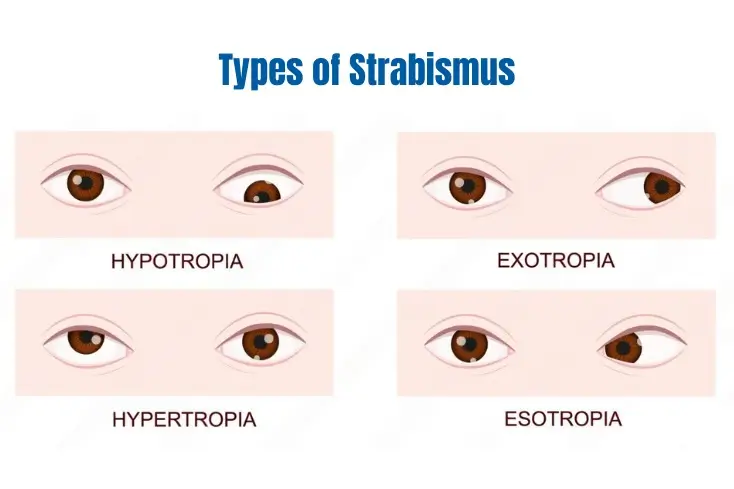
Strabismus, also known as crossed eyes, is a disorder that is defined by the inability of the eyes to be aligned properly. It is an instance in which one of the eyes faces inwards (esotropia), outwards (exotropia), upward (hypertropia) or downwards. Such misalignment leads to the eyes operating independently and therefore leads to such problems as double vision, lack of depth perception and even amblyopia or lazy eye when the brain does not give much attention to the weaker eye. Even though it cannot be completely avoided, early treatment can correct the eyes, restore the best vision using glasses and even avoid complications. There are non-invasive ways of treatment, such as glasses and patching, and complex surgical interventions. In India, with high usage of screens and pollution in the urban areas being the major factors, Strabismus is a major cause of eye strain.
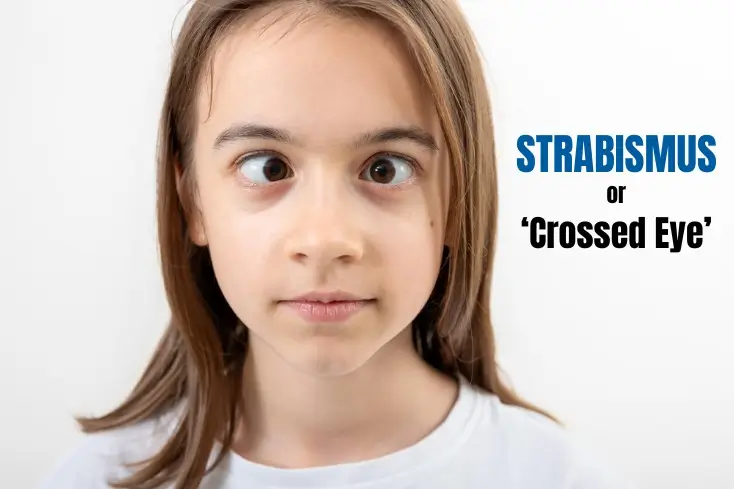
Symptoms of strabismus can be identified early by regular, thorough eye check-ups at such centres as the Save Sight Centre in Delhi. Their experts apply the latest diagnostics to design individual strabismus treatment strategies to make sure that the vision is formed in a normal manner and that the everyday routines are not disturbed.
Effective treatment depends on age, severity, and cause. Here's a breakdown of proven approaches, starting with conservative options.
Strabismus presents different symptoms, but usually, the eye appears misaligned, especially when the person is fatigued or looking at nearby objects. Other symptoms: tilting of the head more frequently to make up, keeping one eye in bright light, lack of eye contact, or difficulty following moving objects. It can manifest itself in infants in the form of wandering eyes, and in adults after a trauma or thyroid problems.
Successful treatment of strabismus is based on early detection. An example is that the American Academy of Ophthalmology recommends that screening be conducted at six months of age. Pediatric ophthalmologists at Save Sight Centre do cover tests and use synoptophore to ensure the diagnosis, which preconditions specific treatment before the development of amblyopia.
Many cases stem from uncorrected refractive errors like farsightedness. Prescription glasses relax eye muscles, reducing deviation. Vision therapy, a structured program of eye exercises, further strengthens coordination.
The therapy may include pencil push-ups (with a concentration on a near pencil and moving it away), Brock string exercises to concentrate on convergence or computer-based programs. Research indicates that this treatment of strabismus improved mild cases of accommodative esotropia by 60-80%. The high-screen-time setting of Delhi is even more successful when UV-defending glasses are used along with therapy.
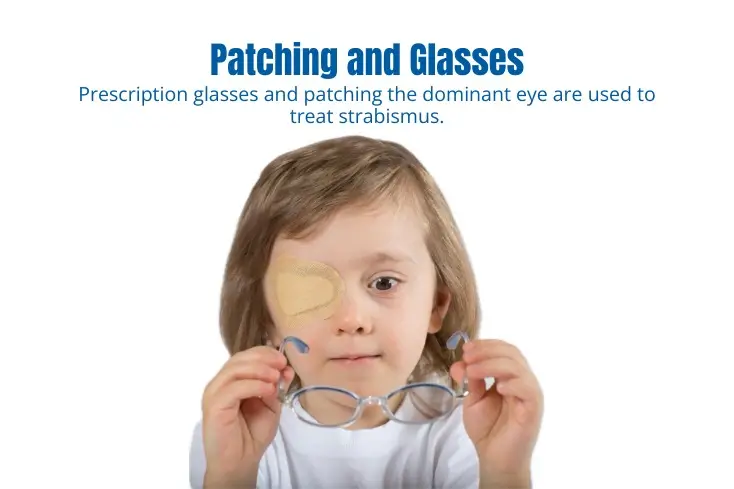
Amblyopia often accompanies strabismus, so strabismus treatment includes patching the dominant eye for 2-6 hours daily, forcing the weaker eye to engage. Alternatives like atropine drops blur the strong eye, achieving similar results with less compliance hassle. Success rates are upto 80% as proven by clinical trials.
For persistent misalignment, strabismus surgery tightens or loosens eye muscles using precise incisions. It's outpatient, with adjustable sutures allowing post-op tweaks.
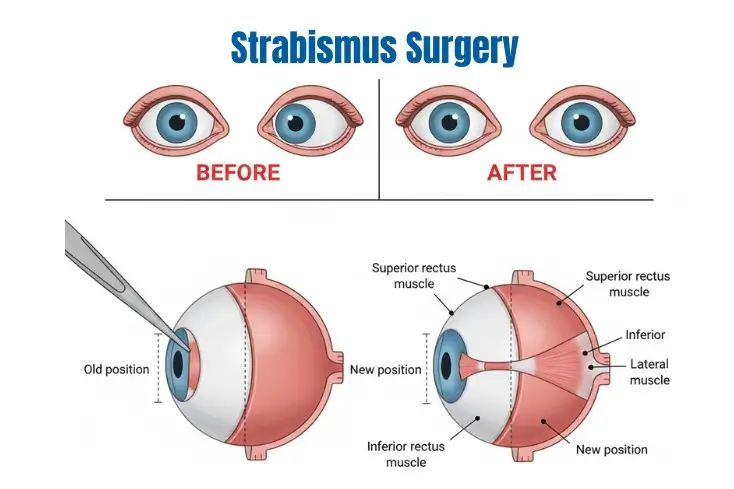
Strabismus surgery is performed and has a 70-90 percent success rate of alignment. Expert centres have low risks, such as over / under-correction (less than 10%). Vision therapy is reinforced after surgery. Smoking in adults and a poor diet should be avoided as they interfere with the recovery; healthy habits enhance the effectiveness of strabismus treatment.
Myths abound: "Strabismus fixes itself," or "Only kids need strabismus treatment." Facts: Untreated strabismus worsens psychosocially (bullying in kids) and functionally (job limitations in adults). Eye yoga helps mildly but doesn't replace professional treatment.
Ignoring symptoms of strabismus can lead to permanent issues. Beware unverified apps or drops. Proven strabismus treatment culminates in strabismus surgery for complex cases, backed by evidence from journals like Ophthalmology.
Do not wait, as strabismus treatment needs immediate action. Consult in case of intermittent deviation, family history or related headaches/fatigue.
Triggers: blurred vision, diplopia or problems reading. The diabetic eye tests, OCT and motility are performed at the Save Sight Centre in Delhi by specialists. They focus therapy on strabismus surgery with phaco-like precision in adult patients, and 20/40 vision or better is achieved in a brief period.
At Save Sight Centre, strabismus treatment is holistic. From infancy screenings to adult reconstructions, our 15-year NABH-accredited team handles 500+ cases yearly. Our Squint Specialist, Dr. Himshika Aggarwal, integrate AI-driven diagnostics for precise strabismus surgery planning.
We offer leveled cares ranging from minor shifts to major disorientation, focusing on the busy lifestyle of Delhi. Mild ones are treated by proactive observation and specialised vision therapy to reinforce eye coordination, whereas moderate patients can be treated by precision Botox injections, which is a minimal-invasive reset of eye muscles and that has zero downtime.

For more complex requirements, our bespoke strabismus operation will provide the final realignment, and highly developed monovision will enable you to switch between digital screens and social life without wearing heavy lenses. Book your consultation today to get a vision plan specifically designed for you.
Therapy begins with glasses, patching, or eye training to optimise the brain-eye relationship. But unless this is achieved, surgery is advised before the age of 9 years to guarantee a 95% success rate.
Strabismus does not correct itself, and postponement of treatment usually results in amblyopia (permanent loss of vision). The intervention of a professional is required to get a stable and long-term alignment.
This is done with anaesthesia to be painless; the patient is not expected to experience any pain in the post-operative period, although some mild scratchiness and redness last 4-6 weeks and the majority of patients resume normal life within days.
It is very effective, and surgery has corrected alignment in approximately 75 percent of the cases. It is also found that treatment is effective in enhancing social confidence and functional 3D depth perception.
Consultation should be sought as soon as the symptoms are observed so that the condition does not progress. It is recommended that screenings should be done regularly, once every 12 months in children and once every 6 months in adults at high risk.
Copyright © 2025 | Save Sight Centre | All Rights Reserved.