
 +91-7873-222-000
 WhatsApp

 Book Appointment
Retinopathy of Prematurity (ROP): Protecting the Sight of Premature Babies
Some premature babies develop a serious eye condition called Retinopathy of Prematurity. It rarely shows any obvious signs — which is exactly why screening, not symptoms, is what protects a premature baby's vision.
Quick Answer
Retinopathy of Prematurity (ROP) is an eye condition that can affect babies born too early, mainly those born before 31 weeks of pregnancy or weighing under 1,500 grams. Because the retina's blood vessels haven't finished developing at birth, they can grow abnormally afterward — leaking, scarring, or pulling on the retina. ROP rarely causes noticeable symptoms, so a scheduled eye screening, usually 4-6 weeks after birth, is the only reliable way to catch it. Most cases are mild and resolve without treatment, but more severe stages are treated successfully with laser therapy, injections, or surgery.
Key Takeaways
- ROP mainly affects babies born before 31 weeks of pregnancy or weighing less than 1,500 grams at birth.
- It's often called a "silent" condition — there are usually no early symptoms, so screening is essential rather than watching for signs.
- ROP progresses through 5 stages; most babies have mild cases (stage 1-2) that improve on their own.
- The first eye screening typically happens 4-6 weeks after birth, with regular follow-up if the baby is at risk.
- Laser photocoagulation successfully treats ROP in about 90% of cases when done at the right stage.
- Children who've had ROP are more likely to develop squint, lazy eye, astigmatism or myopia later, so ongoing pediatric eye care matters.
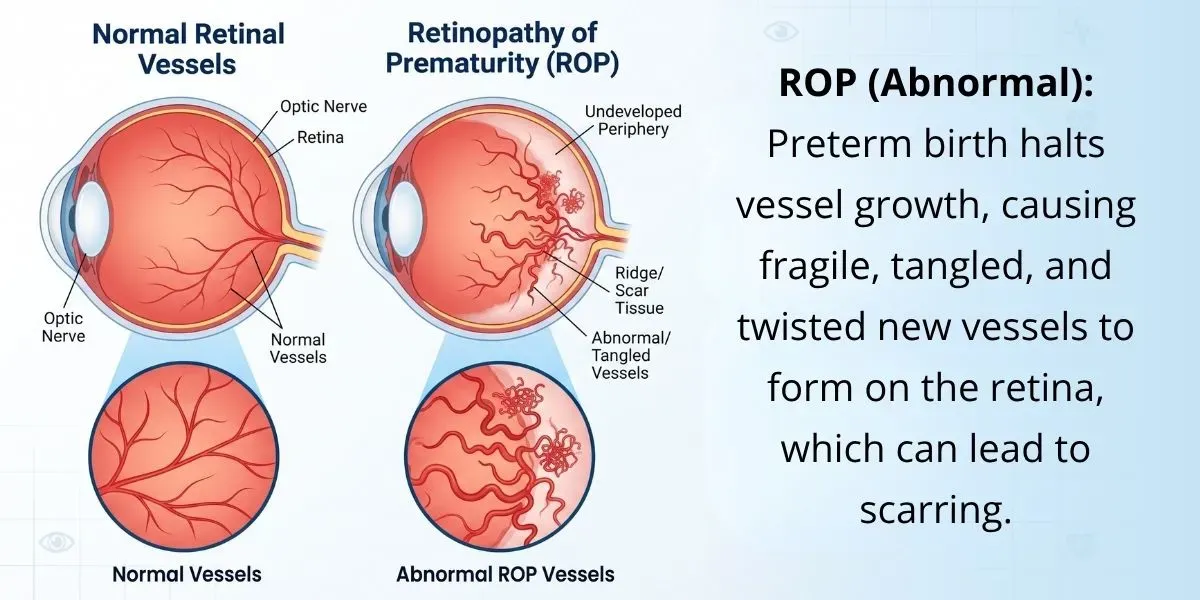
What Is Retinopathy of Prematurity (ROP)?
Our eyes are one of our most important sense organs, so protecting them is very important — especially in a baby's earliest, most vulnerable weeks. Retinopathy of Prematurity is a condition where abnormal blood vessels grow in the retina, the light-sensitive layer at the back of the eye that helps us see.
ROP mainly affects babies born before 31 weeks of pregnancy or weighing less than 1,500 grams at birth. If these abnormal blood vessels leak or form scars, they can damage the retina — and in severe, untreated cases, this can lead to vision loss or even blindness.
Why Are Premature Babies at Risk?
The retina fully develops during the final weeks of pregnancy. If a baby is born too early:
The blood vessels in the retina may not have finished developing at birth. Oxygen therapy, and the changing oxygen levels a premature baby often experiences after birth, can disturb this normal growth. Combined with other medical problems newborns may face, these factors can trigger the abnormal blood vessel growth that defines ROP.
What Are the Risk Factors for ROP?
Long-Term Oxygen Therapy
Extended or fluctuating oxygen exposure is one of the most established risk factors for ROP.
Respiratory Distress or Infection
Neonatal respiratory distress syndrome and infections both raise the risk of ROP developing.
Bleeding in the Brain
Intracranial hemorrhage in a premature baby is linked to a higher risk of ROP.
Poor Weight Gain After Birth
Babies who gain weight slowly after birth show a higher incidence of ROP.
Blood Transfusions
Multiple blood transfusions in the NICU period are associated with increased ROP risk.
Regular follow-ups and eye screenings help doctors detect and manage the condition early, regardless of which risk factors are present.
What Are the Stages of Retinopathy of Prematurity?
ROP develops in stages, and it can progress quickly within just weeks — which is exactly why routine eye screening matters so much.
| Stage | What's Happening |
|---|---|
| Stage 1 | Mild abnormal blood vessel growth — usually improves on its own without treatment |
| Stage 2 | Moderate abnormal growth — needs close monitoring |
| Stage 3 | Severe abnormal growth — treatment is needed to prevent damage |
| Stage 4 | The retina starts to partially detach — this is serious and needs treatment |
| Stage 5 | Complete retinal detachment — can cause permanent vision loss even with treatment |
Two terms you may hear: "Aggressive ROP" describes a severe form that worsens unusually quickly, and "Plus disease" describes widened, wavy blood vessels in the retina — a sign the condition is especially active. Your baby's eye specialist will explain if either applies, and what it means for their treatment plan.
How Common Is ROP, and Who Should Be Screened?
Screening criteria are typically based on birth weight and gestational age, but these cutoffs vary somewhat by country. Western guidelines commonly screen babies born before 31 weeks or under 1,500 grams. Proposed screening guidelines for India recommend a broader cutoff — babies born before 34 weeks or under 2,000 grams — reflecting differences in neonatal care settings and risk patterns. Any baby with additional risk factors, regardless of these cutoffs, may also need screening at their neonatologist's discretion.
Why Is Early Eye Screening So Important?
Early detection is the key to preventing vision loss from ROP.
First screening: Usually done 4-6 weeks after birth — babies born extremely early may need it sooner, as their doctor will advise.
Regular follow-up: Continues at intervals if the baby is found to be at risk, since ROP can progress within weeks.
Advanced imaging: Eye specialists use retinal imaging equipment to detect even the smallest early changes.
Premature babies are also more likely to develop squint (strabismus), weak eye muscles, and delayed visual development. Regular check-ups help manage these problems early too.
Warning Signs and Symptoms
ROP usually does not show early symptoms. It's often called a "silent" condition because parents may not notice any changes at first — this is exactly why screening, not waiting for signs, is what actually protects a baby's vision.
These signs, when they do appear, usually only show up in more advanced stages — by which point screening should already have caught the condition.
What Are the Treatment Options for ROP?
Treatment depends on the stage and severity of the disease.
Laser Photocoagulation
The most common treatment — it stops abnormal blood vessel growth, is safe and quick, and is done under anaesthesia. Laser therapy successfully treats ROP in about 90% of cases.
Anti-VEGF Injections
These injections stop unwanted blood vessel growth, given carefully by experienced eye surgeons under sterile conditions.
Scleral Buckling or Vitrectomy Surgery
If the retina has detached, surgery is needed to reattach it, using the same vitrectomy techniques used for other retinal conditions, with advanced methods for the best possible results.
Follow-Up Care and Long-Term Eye Health
Babies with ROP need regular monitoring as they grow. Later, they may develop lazy eye, squint, astigmatism, or myopia (short-sightedness). Pediatric eye specialists help manage these issues to support healthy eye development well beyond the newborn period.
A Note for Parents
Meeting your baby before you planned to can feel overwhelming — especially when you also learn they have an eye condition. It's completely okay to feel worried. The reassuring part is that most babies with ROP have mild cases that need no treatment at all, and when treatment is needed, it's usually very successful.
Retinopathy of Prematurity can be prevented from causing blindness — but only with timely action: early diagnosis, regular eye screening, and professional medical care. Ask your baby's eye specialist as many questions as you need — understanding what's happening inside your baby's eyes, and what to expect next, is part of protecting their sight.

Dr. Rajeev JainDirector · Retina, Cataract, LASIK & Uvea Specialist
"ROP is one of the conditions where timing really is everything — a baby can go from a mild, watch-and-wait stage to one that needs urgent treatment within just a couple of weeks. That's why we never rely on symptoms; scheduled screening is the only thing that reliably protects a premature baby's vision. Parents are understandably anxious in the NICU period, but I always remind them: most babies with ROP do very well, especially when screening happens right on schedule."
Frequently Asked Questions About Retinopathy of Prematurity
ROP is an eye condition that can affect babies born prematurely, where abnormal blood vessels grow in the retina because it hasn't finished developing. These vessels can leak or scar, and in severe cases, this can lead to retinal detachment and vision loss if not treated in time.
Babies born before 31 weeks of pregnancy, or weighing less than 1,500 grams at birth, are at the highest risk. Additional risk factors include long-term oxygen therapy, infections or breathing problems, poor weight gain after birth, and blood transfusions.
The first ROP screening is typically done 4 to 6 weeks after birth, though babies born extremely early may need it sooner — their neonatologist and eye specialist will confirm the exact timing based on how premature they were. Regular follow-up visits then continue if the baby is at risk.
No. Most babies with ROP have mild cases (stage 1 or 2) that improve on their own without treatment. Only more advanced stages, or ROP that's progressing quickly, need active treatment such as laser therapy or anti-VEGF injections.
Plus disease describes a more severe pattern of ROP where the blood vessels in the retina become notably widened and wavy. It's a sign that the condition is more active and usually means treatment is needed sooner rather than later.
Laser photocoagulation successfully treats ROP in about 90% of cases when performed at the right stage. It works by stopping abnormal blood vessels from continuing to grow, protecting the retina from further damage.
ROP itself can't always be prevented, since it's linked to how early a baby is born. However, careful management of oxygen therapy in the NICU and close monitoring can help reduce the risk of severe ROP, which is why regular screening remains the most important protective step.
Children who've had ROP are more likely to later develop squint (strabismus), lazy eye (amblyopia), astigmatism, and myopia (nearsightedness). Regular follow-up with a pediatric eye specialist helps catch and manage these issues early.
Yes, somewhat. Western guidelines typically screen babies born before 31 weeks or under 1,500 grams. Proposed screening guidelines for India recommend a broader cutoff — babies born before 34 weeks or under 2,000 grams — since risk patterns can differ in Indian neonatal care settings. Always follow your baby's neonatologist's specific recommendation.
In its most severe form (stage 5, total retinal detachment), ROP can cause permanent vision loss even with treatment. However, this is uncommon when screening happens on schedule, since most cases are caught and treated well before reaching this stage.
Has Your Baby Been Referred for an ROP Screening?
Get a prompt, thorough eye evaluation at Save Sight Centre, Adarsh Nagar, North Delhi. NABH & ISO accredited · 25+ years · 1,70,000+ patients treated.
Disclaimer: For general awareness only, not medical advice. Please consult a pediatric eye specialist at Save Sight Centre to determine the right screening schedule and treatment for your baby. Results vary by person. Figures cited are approximate and based on general clinical patterns and published research.