
There are many situations in which bags under eyes may appear after a poor night’s sleep, during allergy seasons, after crying, when consuming too much salt, as part of the natural aging process, etc.
Bags under eyes are a common concern that affects people of all ages. Millions of people experience this condition occasionally or regularly. They often develop due to aging, fluid retention, lack of sleep, allergies, or lifestyle habits. Although they may make someone look tired, they’re usually harmless.
Although they may look concerning, bags under eyes rarely signal a serious health condition. However, persistent swelling, redness, or pain should always be evaluated by an eye specialist.
1.1 Anatomy of the Under-Eye Area
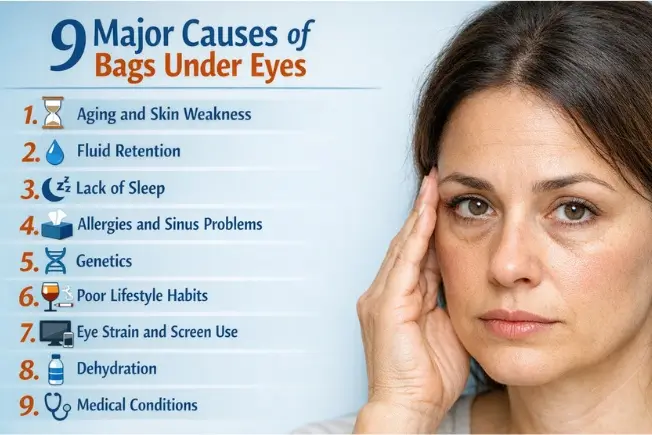
2. 9 Major Causes of Bags Under Eyes
2.4 Allergies and Sinus Problems
3. Effective Treatment Options for Bags Under Eyes
3.4 When to See an Eye Specialist
4. Prevention Tips for Bags Under Eyes
4.4 Stress and Screen Management
5. Frequently Asked Questions (FAQs)
5.1 Are bags under eyes permanent?
5.2 Can drinking water reduce eye bags?
5.3 Do eye creams really work?
5.4 At what age do eye bags usually appear?
5.5 Are bags under eyes a sign of illness?
Bags under eyes are mild swelling or puffiness that appear beneath the lower eyelids. They often develop with age but can also affect younger people due to lifestyle habits, allergies, or genetics.
The skin around the eyes is extremely thin and delicate. Over time, tissues and muscles supporting the eyelids weaken. When this happens, the fat that normally supports the eyes can shift into the lower eyelids, creating a puffy appearance.
In addition, fluid may accumulate in this area, making the swelling look more noticeable. That’s why many people wake up with puffier eyes in the morning.
While bags under eyes are usually harmless and mostly a cosmetic concern, they can affect confidence and make someone appear tired or older than they are.
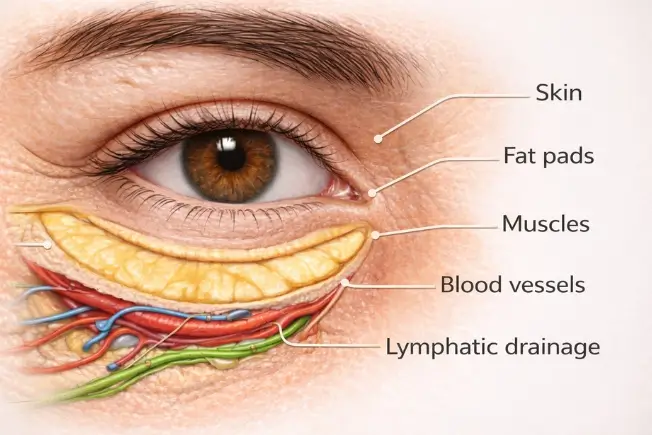
To understand why eye bags develop, it helps to know the structure of the under-eye area.
The region includes:
| Structure | Function |
|---|---|
| Skin | Very thin and sensitive |
| Fat pads | Provide cushioning for the eyes |
| Muscles | Help eyelids move and support tissues |
| Blood vessels | Supply oxygen and nutrients |
| Lymphatic drainage | Removes excess fluid |
As we age, collagen production declines. This weakens the structure that holds fat pads in place. As a result, fat shifts downward and creates visible bags under eyes.
Understanding the root causes helps determine the best approach. Below are the most common reasons people develop eye bags.
Aging is the most common cause.
With time:
This process leads to sagging skin and visible bags under eyes
Fluid accumulation under the eyes often occurs due to:
The swelling is usually worse in the morning but improves during the day.
Sleep deprivation affects circulation and fluid balance. When someone doesn't sleep enough, blood vessels dilate and fluid may collect around the eyes.
This results in:
Adequate sleep is one of the easiest prevention tips for eye bags.
Allergic reactions trigger inflammation and swelling. When histamines are released, blood vessels expand and fluid accumulates under the eyes.
Symptoms often include:
Treating allergies can significantly reduce bags under eyes.
Sometimes eye bags run in families. If your parents or grandparents had them, you may be more likely to develop them as well.
Genetic factors can influence:
Certain habits worsen eye puffiness:
These factors accelerate aging and weaken skin support structures.
Long hours on phones, laptops, or TVs strain the eyes and reduce blinking.
This can cause:
Taking screen breaks helps prevent bags under eyes.
When the body lacks water, it retains fluid in certain areas—including under the eyes.
Drinking enough water keeps tissues balanced and reduces swelling.
In rare cases, eye bags may result from medical issues such as:
This can cause:
If puffiness is severe or persistent, medical evaluation is recommended.
The good news is that several bags under eyes treatment exist. Treatments range from simple home remedies to advanced medical procedures.
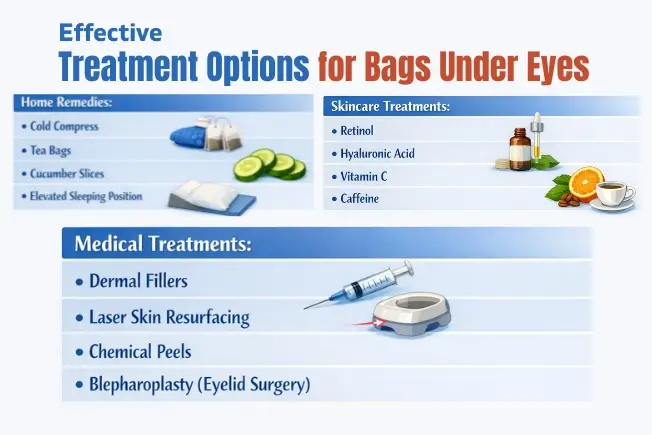
Many people first try natural methods. Popular remedies include:
a) Cold compress: Cold temperatures shrink blood vessels and reduce swelling.
1. Wrap ice cubes in cloth
2. Place gently under eyes
3. Leave for 5–10 minutes
b) Tea bags: Caffeine in tea can improve circulation.
c) Cucumber slices: Cucumbers hydrate and soothe irritated skin.
d) Elevated sleeping position: Sleeping with the head slightly raised prevents fluid accumulation.
Certain skincare products can improve under-eye appearance.
Look for ingredients like:
Regular use may gradually improve bags under eyes.
For persistent cases, medical procedures may be recommended. Common options include:
a) Dermal Fillers: Hyaluronic acid fillers smooth hollow areas under the eyes.
b) Laser Skin Resurfacing: Laser treatments tighten skin and stimulate collagen production.
c) Chemical Peels: Peels improve skin texture and tone.
d) Blepharoplasty (Eyelid Surgery): This surgical procedure removes excess fat and skin from the eyelids. Results are long-lasting and can significantly reduce bags under eyes.
You should consult an eye doctor if eye bags are accompanied by:
A specialist can identify underlying causes and recommend proper treatment options.
Preventing eye bags is often easier than treating them. Simple lifestyle adjustments can make a noticeable difference.

Sleep is essential for eye health. Tips include:
Good sleep reduces fluid buildup and prevents bags under eyes.
Nutrition plays an important role. Foods that support skin health include:
Avoid excessive salt because it increases fluid retention.
Daily skincare protects delicate eye skin. Recommended routine:
1. Gentle cleansing
2. Eye cream application
3. Sunscreen use
4. Hydration
UV exposure accelerates skin aging and worsens eye bags.
Reducing stress improves circulation and skin health. Helpful strategies:
Proper hydration supports lymphatic drainage. Drink 8–10 glasses of water daily. Regular exercise improves circulation and reduces swelling around the eyes.
These habits are simple yet effective prevention tips for bags under eyes.
Not always. Temporary eye bags caused by lack of sleep or fluid retention usually disappear within a day. However, age-related eye bags may require treatment.
Yes. Proper hydration helps balance fluids in the body and may reduce swelling under the eyes.
Eye creams containing caffeine, retinol, or hyaluronic acid can improve skin texture and reduce mild bags under eyes.
They often appear after age 30–40 as collagen production decreases, though genetics may cause earlier appearance.
Usually no. However, persistent swelling along with redness or pain should be checked by a doctor.
Cold compresses and caffeine-based eye creams provide quick temporary relief.
Yes. High-salt diets and dehydration increase fluid retention, making eye bags more noticeable.
At Save Sight Centre in Delhi,, under-eye worries are certainly not regarded as "only cosmetic"." The team does not stop at just recognising whether your bags are only due to ageing and lifestyle, but also checks if a contributing eye or health problem exists underneath. Through a detailed eye and eyelid examination, infections, allergies, dry eye, or systemic causes can be ruled out, and you obtain clear instructions regarding the safest treatment options for your condition.
Based on your requirements, the experts at Save Sight Centre may recommend the use of medicine, lifestyle changes, correct skincare and the time for advanced choices like oculoplastic surgery by skilled surgeons. If the presence of bags under your eyes is disturbing you or they have changed suddenly, a consultation appointment will provide you with clarity, confidence, and a personalised plan to look and feel your best.
Copyright © 2025 | Save Sight Centre | All Rights Reserved.