
For sunken eyes, the medical term is enophthalmos, which means the eyes appear sunken into their sockets, giving them a hollow or gaunt appearance, and is usually accompanied by visible dark circles. The word itself is derived from Greek - en, meaning inward, and ophthalmos means eye. The eyeball remains in its normal position within the bony socket due to a tight balance within the socket. Fat pads, connective tissue, muscles, and bone all form to keep the globe in place. When any of these structures become smaller, erode, fracture, or scar, the eye loses its support and floats backwards.
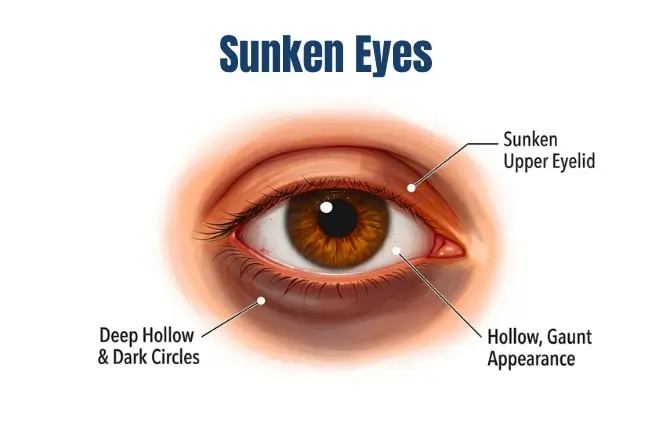
The condition can be something you are born with (congenital) or something that develops after birth (acquired), and it can affect one eye or both. In children, the most common culprit for dehydration from a stomach illness is usually restored with fluids quickly. In adults, the picture is more varied. Orbital fractures, fat loss with age, sinus collapse, chronic disease, and some medications can all cause the eye to sink. Some causes are harmless. Others require immediate medical care. The issue is which is which, and that begins by understanding what's actually going on inside the eye socket.
1. Types of Sunken Eyes Doctors Diagnose
2. Symptoms of Sunken Eyes You Should Not Ignore
3. Sunken Eyes Treatment Options
5. Save Sight Centre's Expert Insights
6.1 Are sunken eyes the same as dark circles?
6.2 Can sunken eyes in children be serious?
6.3 Can sunken eyes be a sign of cancer?
Enophthalmos is not a single condition. Doctors classify it by cause, as the classification directly affects the treatment plan. Getting the type correct is important.
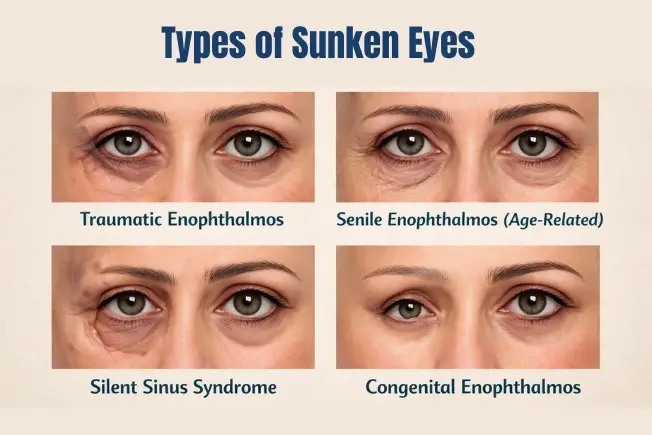
Traumatic enophthalmos is the most common type seen in adults. It typically occurs after high-impact injuries such as car, motorcycle, or bicycle accidents, as well as physical trauma from fights. These incidents can lead to fractures in the bones surrounding the eye (especially orbital floor fractures), causing the eye to sink backward. This type is observed more frequently in men due to higher exposure to trauma-related risks.
Senile enophthalmos develops as a natural part of aging. Over time, there is a gradual loss of orbital fat (fat atrophy) along with structural remodeling of the eye socket bones. This combination leads to a hollow, sunken appearance of the eyes. It is particularly common in postmenopausal women, where hormonal changes influence fat distribution and volume loss around the eyes.
Silent sinus syndrome is a lesser-known but increasingly recognized cause of sunken eyes. It occurs due to chronic blockage of the maxillary sinus, an air-filled cavity located beneath the eye. As the sinus becomes obstructed, it gradually collapses inward, pulling the orbital floor downward. This shift causes the eye to sink and may also lead to facial asymmetry over time.
Congenital enophthalmos is present at birth and is usually linked to developmental abnormalities of the facial bones. Conditions such as neurofibromatosis or other craniofacial syndromes can result in missing or underdeveloped orbital structures. These structural differences lead to a sunken appearance of the eye from an early age.
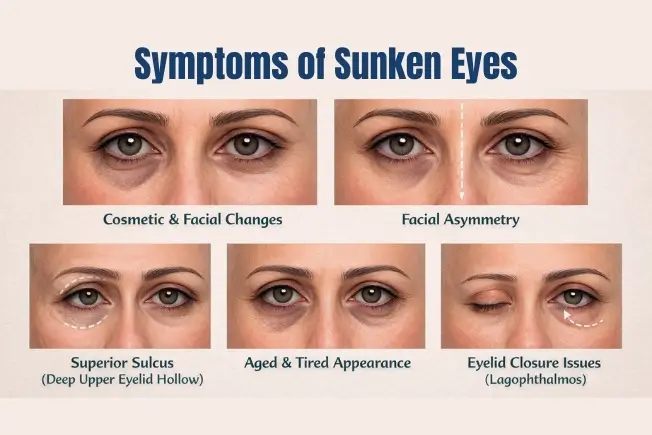
The most noticeable symptom of sunken eyes is the change in appearance. One or both eyes may appear set deeper into the face than normal, creating a hollowed or recessed look. The areas beneath the brow and under the lower eyelid often appear shadowed and sunken, which can exaggerate dark circles. This change in light and shadow around the eyes gives the face a drawn, fatigued, or even unwell appearance, even when the person is otherwise healthy.
Sunken eyes can lead to visible facial imbalance, especially when only one eye is affected. One eye may appear more recessed than the other, making the asymmetry particularly noticeable in photographs or during conversation.
This unevenness can subtly alter overall facial harmony and is often one of the earliest signs that something is structurally different in the orbit.
A deep groove known as the superior sulcus may form below the brow. As the eye sinks further back, this hollow becomes more pronounced and creates a distinct indentation in the upper eyelid area. This hollowing casts shadows over the eye, intensifying the appearance of dark circles and making the eyes look more deeply set. It is a key feature that contributes to the characteristic “sunken” look.
Due to volume loss and increased shadowing, individuals with sunken eyes often appear older or chronically tired. The face may take on a gaunt or stressed look, even in well-rested individuals. This effect is largely due to the loss of natural fullness around the eyes, which normally reflects light and gives the face a youthful appearance.
Sunken eyes can affect the position and support of the upper eyelid, leading to drooping, known as ptosis. The eyelid may sit lower than usual, partially covering the eye. In more pronounced cases, this can interfere with vision, especially in the upper field, and may cause individuals to strain their forehead muscles to keep their eyes open.
In some cases, the eyelids may not close completely, particularly during sleep. This condition, called lagophthalmos, leaves part of the eye exposed to air for prolonged periods. As a result, the eye can become dry, irritated, and sensitive to light or dust. Over time, this exposure may damage the cornea, increasing the risk of infections or vision problems if not properly managed.
Treatment for enophthalmos is not one size fits all. The approach is entirely dependent upon what made the eye sink, how long it has been there, and if it is causing functional problems other than the appearance.
Sunken eyes caused by trauma, such as an orbital floor fracture, require a carefully timed approach. Swelling after injury can last up to two weeks, and symptoms like double vision may resolve on their own during this period.
Doctors usually wait for the swelling to subside before deciding on surgery. If needed, orbital reconstruction is performed by placing a small implant in the eye socket floor. This restores the lost support and brings the eye back to its natural position, correcting the sunken appearance.
When sunken eyes occur due to aging, weight loss, or natural volume depletion, restoring lost tissue becomes the focus. Fat grafting uses the patient’s own fat to replenish volume under and around the eyes, creating a smoother and more youthful contour.
In more pronounced cases, orbital implants may be used to rebuild deeper structural support. These treatments not only improve appearance but also restore natural facial balance.
Hyaluronic acid-based dermal fillers are one of the most popular non-surgical treatments for sunken eyes. These fillers are injected into the under-eye hollows (tear troughs) to restore volume and reduce shadowing.
They provide immediate results with minimal downtime, making them ideal for mild to moderate cases. However, results are temporary and typically last between 12 and 18 months, requiring periodic touch-ups.
In cases where sunken eyes are caused by silent sinus syndrome, treating the sinus is essential. This condition leads to the gradual collapse of the sinus cavity, pulling the eye inward and downward.
Endoscopic sinus surgery helps restore normal sinus structure and function. As the sinus re-expands, the orbital floor often returns to its original position, which can significantly improve or even reverse the sunken eye appearance without additional cosmetic procedures.
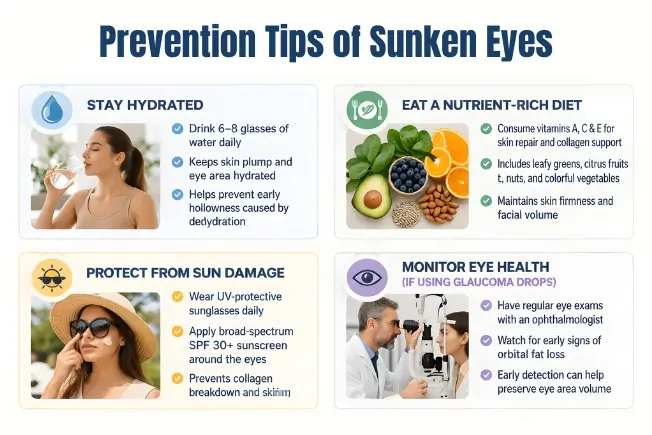
Not all causes of enophthalmos are preventable. Aging occurs, genetics are immutable, and accidents cannot always be avoided. But a number of the contributing factors are under everyday control, and correcting these from an early stage puts less stress on how quickly or how badly hollowing will develop.
Save Sight Centre ophthalmologists detect enophthalmos during routine eye examinations and help make referrals to oculoplastic surgeons and systemic specialists when structural or disease-related causes are detected. On-site imaging, such as CT scanning, is useful in determining the volume of the orbit and identifying potential fractures or sinus collapse before symptoms become more severe.
Oculoplastic teams collaborate closely with gastroenterologists, oncologists and rheumatologists depending on the cause. Nutritionists create unique dietary plans designed to slow down the loss of fat from the face, as well as promote the health and well-being of the skin in the area around the eyes. Annual screenings for high risk groups such as patients on long term glaucoma drops or undergoing head and neck radiotherapy allow changes to be caught early enough to be managed effectively.
Not exactly. Dark circles are discoloration of the skin under the eyes and sunken eyes are the actual position of the eyeball receding in the socket. The causes and treatments are different because they often appear together due to the hollowing, causing shadows to appear as dark circles.
Mild sunken eyes in children are most often due to dehydration or illness and go away with proper hydration. If a child has sunken eyes coupled with diarrhea and vomiting, a doctor should be seen as this can mean that the child is very dehydrated and requires immediate attention.
In some cases, yes. Sunken eyes may be an early indicator of metastatic scirrhous breast cancer and cancers within the eye socket may alter the shape of the tissue in the orbit and cause enophthalmos. Sudden onset of enophthalmos in an adult with no history of trauma or known illness should always be investigated promptly.
They can. Certain drugs used to treat glaucoma can lead to prostaglandin-associated periorbitopathy, and this fat loss around the eyes can be irreversible even if one stops taking the medication. Patients using these drops for long periods of time should discuss any changes in the appearance of their eyes with their doctor during regular checkups.
Sudden onset sunken eyes, especially if they are in only one eye or if they are accompanied by other symptoms such as pain, vision change, or swelling, should be evaluated by a medical professional. Gradual, bilateral changes in the elderly are usually age-related, and new or one-sided changes should always lead to a checkup sooner rather than later.
Copyright © 2025 | Save Sight Centre | All Rights Reserved.