
Have you ever experienced that sudden, uncontrollable flutter in your eyelid that just won’t stop? Eye twitching, medically known as myokymia, is a common yet often frustrating condition that almost everyone experiences at some point in their lives.
While it is usually harmless and temporary, persistent eye twitching can sometimes signal underlying issues related to stress, eye health, or lifestyle habits. Understanding why it happens and how to manage it can help you regain comfort and peace of mind.
Eye twitching refers to involuntary, repetitive spasms of the eyelid muscles. It typically affects the upper eyelid, though the lower eyelid can also twitch in some cases.
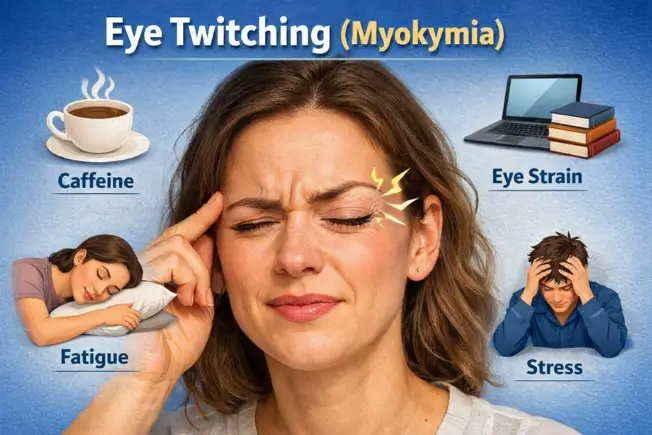
These spasms:
In most cases, eye twitching is harmless and resolves on its own without medical intervention.
Eye twitching is often linked to lifestyle factors and minor irritations rather than serious medical conditions. Let’s explore the most common triggers:
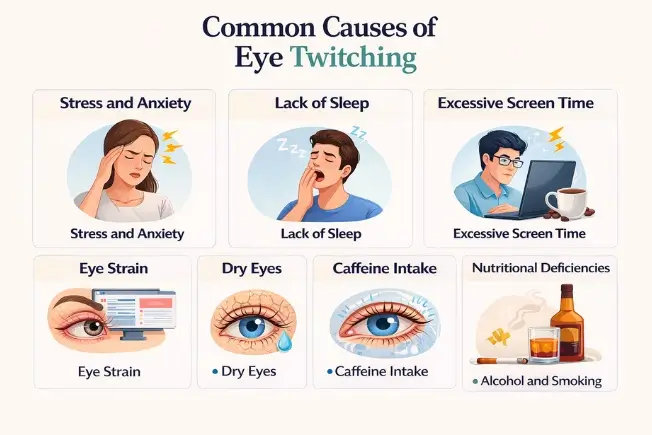
Stress is one of the leading causes of eye twitching. When your body is under pressure, it releases hormones that can overstimulate your nerves and muscles, causing twitching.
Tip: Practising relaxation techniques like meditation or yoga can help reduce stress-related twitching.
Insufficient sleep can strain your eye muscles and nervous system, leading to involuntary spasms.
Ideal sleep duration: 7–8 hours per night
Spending long hours on digital devices can lead to digital eye strain, which contributes to twitching.
Symptoms of digital strain include:
Too much caffeine can stimulate your nervous system and trigger muscle contractions, including eyelid twitching.
Sources of caffeine:
Reading for long periods, driving, or working in poor lighting conditions can strain your eyes and lead to twitching.
Dryness in the eyes can irritate the eyelids and trigger twitching. This is especially common in:
Lack of certain nutrients, especially magnesium, can affect nerve and muscle function, leading to twitching.
Both alcohol and nicotine can affect the nervous system and increase the likelihood of muscle spasms.
Eye-twitching symptoms are usually mild but can become annoying over time. Common signs include:
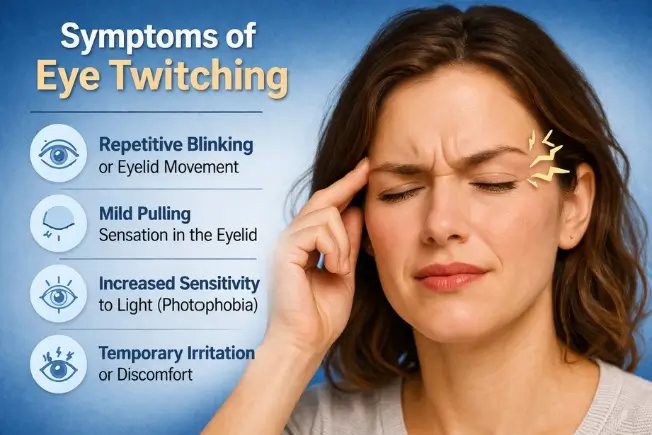
One of the most noticeable signs of eye twitching is repeated, uncontrollable blinking or eyelid fluttering. This movement is usually subtle and may not be visible to others, but the person experiencing it can feel it clearly.
Many people describe eye twitching as a gentle pulling or tugging feeling around the eyelid muscles. This sensation is caused by small, involuntary muscle contractions.
In some cases, individuals experiencing eye twitching may also notice sensitivity to bright light.
Eye twitching is often accompanied by mild irritation in or around the eye.
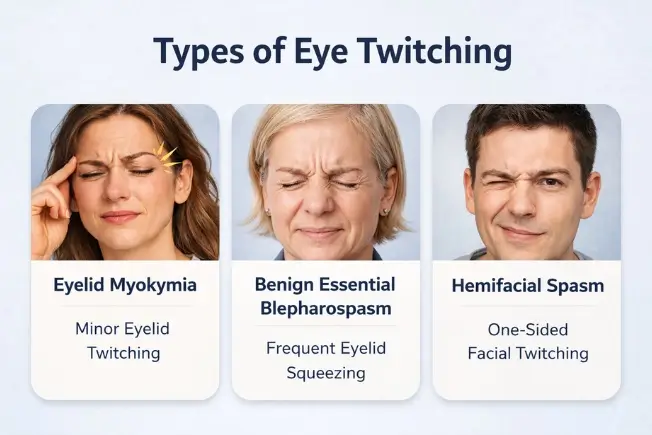
Understanding the type of twitching can help determine whether it’s harmless or requires medical attention.
Most cases of eye twitching resolve without medical treatment. However, depending on the cause, several approaches can help:
Reduce Stress
Improve Sleep Quality
Follow the 20-20-20 rule.
In the 20-20-20 rule, every 20 minutes, look at something 20 feet away for 20 seconds.
Use Artificial Tears
Lubricating eye drops can help relieve dryness and reduce twitching.
Applying a warm compress can relax eye muscles and improve blood circulation.
How to do it:
Include foods like:
For severe or persistent cases:
Botox Injections
Medications
Surgery (Rare)
Used only in severe cases of blepharospasm.
Preventing eye twitching is often about maintaining a healthy lifestyle:
In today’s digital world, eye twitching has become increasingly common due to prolonged screen usage.
How Screens Affect Your Eyes:
What You Can Do:
Let’s clear up some common misconceptions:
This is purely a cultural belief and has no scientific basis.
In most cases, eye twitching is harmless and temporary.
Even children can experience eye twitching due to screen time or stress.
Eye twitching may feel annoying, but it is usually your body’s way of signaling that something needs attention—whether it’s rest, hydration, or stress management.
By making small lifestyle changes and taking proper care of your eyes, you can easily manage and even prevent most cases of eye twitching.
However, if the twitching becomes persistent or severe, don’t ignore it. Consulting an eye specialist ensures timely diagnosis and appropriate treatment.
Eye twitching (eyelid myokymia) is usually caused by stress, lack of sleep, excessive screen time, caffeine intake, or eye strain. In rare cases, it may be linked to neurological conditions, but most episodes are harmless and temporary.
Eye twitching typically lasts a few seconds to a few minutes, but it can recur over several days or even weeks if triggers like stress or fatigue continue. Most cases resolve on their own without treatment.
Yes, stress and anxiety are among the most common causes of eye twitching. When your body is under stress, muscles—including those in the eyelids—can spasm involuntarily.
Yes, sleep deprivation is a major trigger. Poor sleep puts strain on your eye muscles and nervous system, increasing the chances of twitching.
In most cases, eye twitching is not dangerous and does not affect vision. However, if it becomes persistent or severe, it may indicate an underlying condition that needs medical evaluation.
To reduce or stop eye twitching:
Most twitching improves once the trigger is removed.
Copyright © 2025 | Save Sight Centre | All Rights Reserved.