
Eye swelling is a common concern that can affect people of all ages. Whether it’s mild puffiness after waking up or a painful swollen eyelid, it can be uncomfortable and sometimes alarming. While many cases are harmless and temporary, some may indicate an underlying eye condition that requires medical attention.
1. Eye Swelling: Causes, Symptoms & When to See a Doctor
3. Common Causes of Eye Swelling
4.3 Itching or Burning Sensation
4.4 Watery or Sticky Discharge
4.5 Sensitivity to Light (Photophobia)
5. When Should You See a Doctor?
6. Treatment Options for Eye Swelling
7.2 Remove Makeup Before Sleeping
7.4 Protect Your Eyes from Dust and Pollution
7.5 Eat a Balanced Diet for Eye Health
8.1 How long does eye swelling last?
8.3 How can I reduce eye swelling quickly at home?
8.4 Can lack of sleep cause eye swelling?
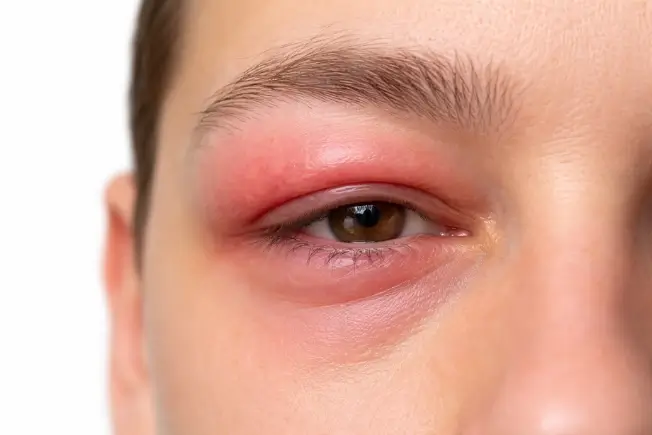
Eye swelling, medically referred to as periorbital edema, is a condition characterized by inflammation, puffiness, or enlargement of the tissues surrounding the eyes. This swelling can affect the upper eyelid, lower eyelid, or both and may occur in one eye (unilateral) or both eyes (bilateral).
The area around the eyes is particularly sensitive because the skin here is thin and delicate, making it more prone to fluid accumulation, irritation, and visible changes. Even a minor imbalance in fluid retention or irritation can quickly lead to noticeable swelling.
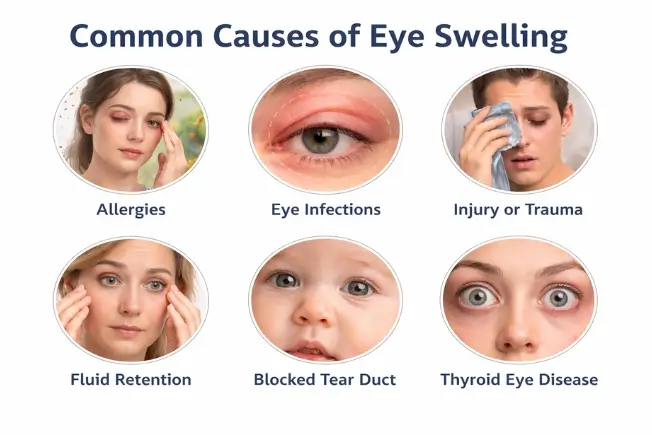
One of the most common causes of eye swelling is an allergic reaction. When your eyes come in contact with allergens such as dust, pollen, pet dander, smoke, or certain cosmetics, the body releases histamines. This leads to inflammation, itching, and fluid buildup around the eyes.
Symptoms:
Eye infections caused by bacteria, viruses, or fungi can lead to noticeable swelling along with discomfort. These infections are often contagious and require proper hygiene and, in some cases, medical treatment.
Common infections include:
Any physical injury near the eye, such as a blow, fall, or accident, can cause immediate swelling due to tissue damage and internal bleeding. This is commonly referred to as a “black eye.”
Signs include:
Fluid retention (also called periorbital edema) is a common and usually harmless cause of eye swelling. It occurs when excess fluid accumulates in the tissues around the eyes.
Common reasons include:
Tears normally drain through small channels called tear ducts. When these ducts become blocked, tears accumulate, leading to swelling and sometimes infection.
Symptoms:
Thyroid-related conditions, particularly overactive thyroid (Graves’ disease), can affect the eyes and cause swelling. This condition occurs when the immune system attacks the tissues around the eyes.
Symptoms include:
Eye swelling can present with a variety of symptoms depending on the cause:
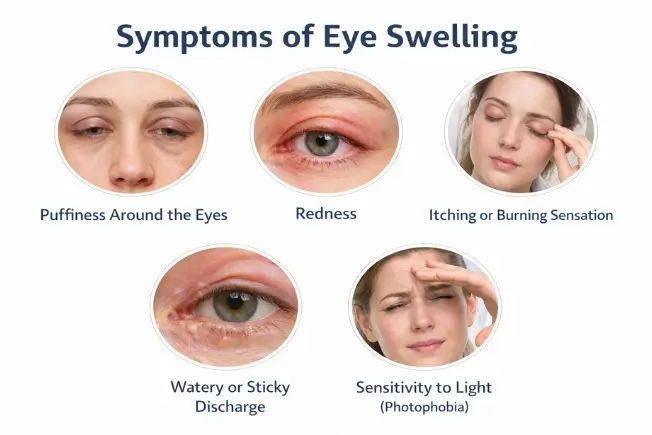
The eyelids or the area under the eyes may appear swollen, heavy, or enlarged due to fluid buildup. Puffiness is often more prominent in the morning or after crying.
Inflammation of the eye tissues can cause visible redness in the eyelids or the white part of the eye. This is commonly seen in allergies, infections, or irritation.
An itchy or burning feeling is typically associated with allergic reactions or environmental irritants like dust, smoke, or chemicals.
Excess tearing or discharge from the eyes may occur.
Bright lights may cause discomfort or pain, especially if the swelling is linked to infections or inflammation inside the eye.
While mild swelling usually resolves on its own, you should seek medical attention if you experience:
These symptoms may indicate a serious eye condition that requires immediate treatment.
Treatment depends on the underlying cause:
In rare cases, minor procedures may be needed for:
To avoid eye swelling, follow these simple tips:
Keeping your eyes clean is essential to prevent infections and irritation. Wash your face regularly, especially after coming from outside, and avoid touching your eyes with unclean hands.
Sleeping with eye makeup can clog the oil glands around your eyelids, leading to irritation, infections, or conditions like stye and chalazion. Always remove makeup gently using a mild cleanser before going to bed.
Rubbing your eyes can worsen irritation, spread infections, and even damage delicate eye tissues. If your eyes feel itchy or irritated, use a clean cloth or artificial tears, or consult an eye specialist instead of rubbing.
Exposure to dust, smoke, and pollution can trigger allergies and irritation. Wear protective eyewear or sunglasses when stepping outdoors, especially in polluted environments or during high pollen seasons.
A nutritious diet plays a key role in maintaining healthy eyes. Include foods rich in:
Dehydration can contribute to puffiness and fluid imbalance around the eyes. Drinking enough water throughout the day helps flush out toxins and prevents fluid retention.
Eye swelling usually lasts a few hours to 2–3 days, depending on the cause. Allergies and fatigue-related swelling improve quickly, while swelling due to infection may last longer and require treatment.
Eye swelling is usually not serious and resolves on its own. However, it may be a concern if it is painful, persistent, or affects vision, as this could indicate an infection or another underlying condition that needs medical attention.
You can reduce mild eye swelling by:
Yes, lack of sleep can lead to fluid buildup around the eyes, causing puffiness and swelling, especially in the morning. Proper rest helps restore normal circulation and reduce swelling.
Sometimes. Infections like conjunctivitis, stye, or blepharitis can cause swelling along with redness, irritation, and discharge. Medical treatment may be needed in such cases.
Yes, excessive screen time can lead to eye strain and dryness, which may cause irritation and mild swelling. Following the 20-20-20 rule and taking breaks can help prevent this.
Copyright © 2025 | Save Sight Centre | All Rights Reserved.