
 +91-7873-222-000
 WhatsApp

 Book Appointment
Role of Eye Drops: Types, Uses & What Each Drop Really Does
Most people have used some kind of eye drop, but not many know the bottle on their bathroom shelf is doing something fundamentally different from the one at their doctor's office. Here's what each type is actually for.
Quick Answer
Eye drops are one of the most direct, effective ways to treat eye problems — a drop lands exactly where it's needed, working faster and with fewer side effects than a pill that has to travel through the whole body. But "eye drops" isn't one category: artificial tears, antibiotic drops, antihistamine drops, steroid drops, glaucoma drops and redness-relief drops all do fundamentally different things. Using the wrong one doesn't just fail to help — it can delay the right treatment or make the underlying problem worse.
Key Takeaways
- Eye drops are broadly grouped by what their ingredients do: lubricate, fight infection, calm inflammation, reduce pressure, or numb the eye.
- Artificial tears and redness-relief drops share a bathroom shelf, but only one treats an actual cause — the other just masks a symptom.
- Glaucoma drops protect vision you still have; they don't restore vision you've already lost.
- Steroid drops are prescription-only for good reason — unsupervised long-term use can raise eye pressure and cause cataracts.
- Correct technique (including nasolacrimal occlusion) meaningfully improves how well any eye drop actually works.
- Persistent symptoms despite regular drop use are a signal to see a specialist, not to keep switching bottles.
What Are Eye Drops and How Do They Work?
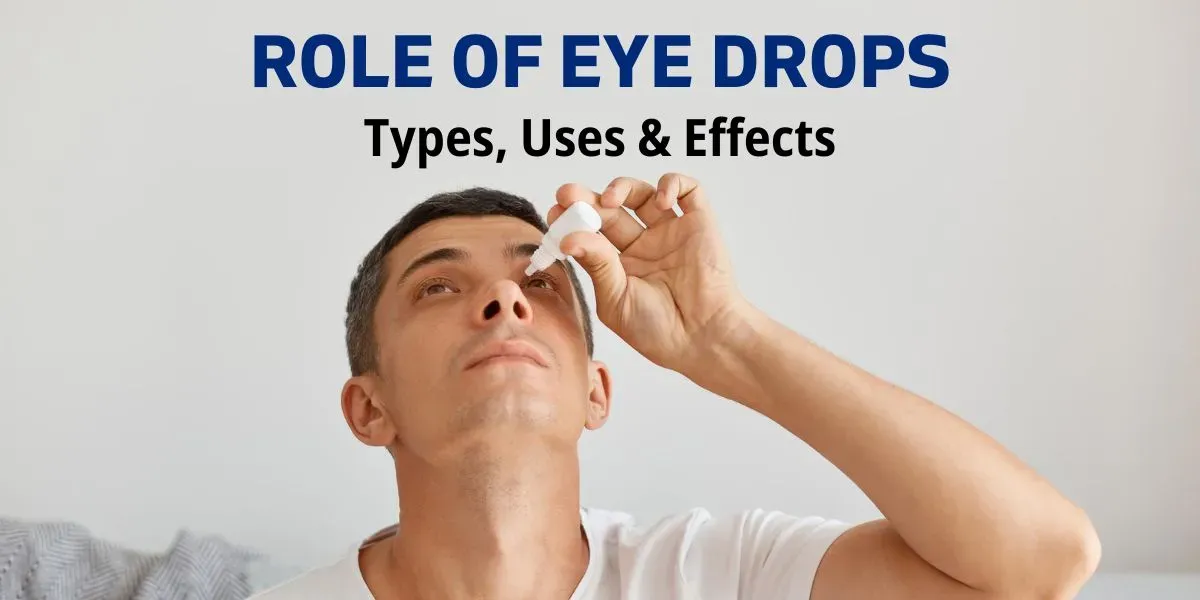
Eye drops are liquid solutions placed directly on the surface of your eye. That directness is exactly what makes them the first line of treatment for such a wide range of conditions — from something as routine as screen-related dryness to something as serious as glaucoma. Because the medication lands right where it's needed, drops tend to work faster and with fewer whole-body side effects than an equivalent pill or tablet.
How Are Eye Drops Classified?
The easiest way to understand eye drops is by what their ingredients actually do — whether that's available over the counter or only by prescription.
| Ingredient Function | What It Does | Availability |
|---|---|---|
| Demulcents (lubricants) | Reduce friction so eyelids move smoothly over the eye | OTC |
| Astringents | Break down mucus and reduce discharge | OTC |
| Vasoconstrictors | Shrink surface blood vessels to reduce redness | OTC |
| Antibiotics | Kill or stop the growth of bacteria | Prescription |
| Antihistamines | Block histamine to relieve allergy symptoms | OTC / Prescription |
| Corticosteroids | Reduce inflammation, swelling and pain | Prescription |
| IOP-lowering agents | Reduce eye pressure to protect the optic nerve | Prescription |
| Mydriatics | Temporarily dilate the pupil for exams or treatment | Prescription / In-clinic |
| Anesthetics | Numb the eye surface to reduce pain | Prescription / In-clinic |
What Types of Eye Drops Are Available and What Do They Treat?
The most common type, available over the counter without a prescription, is artificial tears and lubricating drops, aimed at treating dry eye syndrome. Beyond that, here's what the other major categories are actually for:
Antibiotic Eye Drops
Treat bacterial infections like bacterial conjunctivitis, corneal ulcers, and contact lens-related infections by killing the responsible bacteria.
e.g. ciprofloxacin, moxifloxacin, tobramycin, ofloxacinAntihistamine Eye Drops
Manage allergic reactions — seasonal hay fever, dust, or pet dander — by blocking the histamine that causes itching, redness and watery discharge.
Anti-Inflammatory Eye Drops
Steroids and NSAIDs prescribed for uveitis, keratitis, and post-surgical inflammation, reducing swelling, redness and pain.
e.g. prednisolone, dexamethasoneGlaucoma Eye Drops
First-line treatment for elevated eye pressure. They don't improve vision or give immediate relief — their job is preventing further optic nerve damage.
Antiviral Eye Drops
Treat viral eye infections, most commonly herpes simplex virus, which can scar the cornea and cause permanent vision loss if left untreated.
Decongestant / Redness-Relief Drops
Constrict surface blood vessels for a quick cosmetic fix to red eyes. They don't treat the underlying cause, and overuse can trigger rebound redness.
e.g. tetrahydrozoline, naphazolineCombination eye drops contain two active ingredients in one bottle, usually an antibiotic and a steroid, used when there's both infection and significant inflammation at the same time — such as after eye surgery or in more severe conjunctivitis. TobraDex combines tobramycin with dexamethasone, while Zylet combines tobramycin with loteprednol.
What Are the Different Types of Glaucoma Eye Drops?
Glaucoma drops aren't one-size-fits-all — different classes lower eye pressure through different mechanisms, and your doctor may combine more than one:
| Class | How It Works | Example |
|---|---|---|
| Prostaglandin Analogs | Increase fluid drainage from the eye | Latanoprost |
| Beta-Blockers | Reduce fluid production inside the eye | Timolol |
| Alpha Agonists | Decrease fluid production and improve drainage | Brimonidine |
| Carbonic Anhydrase Inhibitors | Reduce fluid production | Dorzolamide |
Regular, consistent use is crucial — missed doses allow pressure to creep back up, and the resulting optic nerve damage is irreversible.
What Are the Warning Signs You're Using the Wrong Eye Drop?
Using the wrong eye drop doesn't just fail to help — in some cases it actively delays the right treatment or causes new problems.
- Artificial tears for an infection: If you're using lubricating drops for an eye infection, the infection will only get worse, even if the immediate dryness feels a little better — bacterial conjunctivitis needs antibiotic treatment, not lubrication.
- Antibiotics for a viral infection: Applying antibiotic drops for viral conjunctivitis (no greenish discharge, usually both eyes, watery discharge) won't clear the infection and may contribute to antibiotic resistance.
- Steroids for a viral infection: This is the most dangerous misuse — steroid drops used for a viral infection, especially herpes simplex, can cause the virus to spread more aggressively, with potentially serious corneal damage.
- Redness drops used daily: They only mask the symptom, not the underlying cause, so the real problem can keep progressing while your eyes look fine.
What Causes the Eye Problems These Drops Treat?
Knowing what's gone wrong with the eye in the first place is the first step to understanding why a particular drop is needed.
Tear Film Dysfunction
The tear film has three layers — mucus, watery, and oily — each keeping the eyes lubricated. A problem in any layer disrupts stability and leads to dry eyes; reduced blinking during screen use makes it worse.
Bacterial Entry Into the Eye
Infections often begin when harmful microorganisms enter through unclean hands, contaminated contact lenses, or spread from nearby areas like the sinuses.
Allergen Exposure
Airborne allergens like pollen, dust, or pet dander trigger allergic reactions, especially in those with a personal or family history of allergies, worsening in high-pollen seasons.
Increased Intraocular Pressure
The primary underlying cause of glaucoma — from genetic predisposition, aging, certain medications like steroids, or structural drainage issues in the eye.
How Do You Apply Eye Drops Correctly for Best Results?
Even the right eye drop can't work properly if applied incorrectly — many patients don't get the full benefit simply because of technique.
Wash Your Hands
Clean your hands thoroughly before touching any eye drop bottle.
Create a Pocket
Tilt your head back and gently pull your lower eyelid down to form a small pocket.
Instill One Drop
Hold the dropper close without touching your eye or eyelid, and place one drop in the pocket.
Close & Press
Close your eye and press a finger gently on the inner corner for 1-2 minutes — this is nasolacrimal occlusion, and it stops the drop draining into your tear duct and throat, boosting absorption and reducing side effects.
Wait Between Drops
If using more than one type of drop, wait at least 5 minutes between them — otherwise the second drop just washes out the first before it can work.
Glaucoma patients using several drops daily often find an alarm or a simple checklist helps — the effects of missed doses accumulate over time.
Preservative-Free vs. Preserved Eye Drops: Which Should You Choose?
Preservatives extend a bottle's shelf life, but with frequent use they can irritate sensitive eyes or worsen dry eye. Choose preservative-free if you have sensitive eyes or use drops more than four times a day; preserved, multi-use bottles are a safe, cost-effective choice for occasional use.
What General Safety Rules Should You Follow With Any Eye Drop?
Never touch the dropper tip to your eye
Contact contaminates the bottle and can cause dangerous infections and eye damage.
Always close the cap
Uncapped bottles risk contamination from germs, and some ingredients can make you or children/pets sick if ingested.
Never use expired drops
Once expired, the active ingredients may no longer work as intended and the solution is more prone to contamination.
Don't use someone else's prescription
Prescription drops are matched to a specific diagnosis and strength — sharing them can delay your actual treatment.
Never mix up ear and eye drops
The bottles can look alike, but they're formulated differently — always check the label before use.
Buy from reputable sources
Cheaper online sellers aren't always reliable — check for recalls and buy from a trusted pharmacy.
Prevention Tips to Help You Reduce Your Use of Eye Drops
Many conditions that call for eye drops can be reduced in frequency or severity with consistent daily habits:
Follow the 20-20-20 rule
Look at something 20 feet away for 20 seconds every 20 minutes to limit dryness from suppressed blinking during screen use.
Use a humidifier
Puts moisture back into AC-heavy rooms and reduces evaporation.
Wear wraparound sunglasses
Protects from UV rays and reduces dust and pollen blowing directly into your eyes.
Shower after high-pollen exposure
Reduces the allergen load you carry home and onto your pillow during high-pollen seasons.
Get pressure checked from 40 if at risk
Anyone with a family history of glaucoma should have eye pressure checked from age 40, or earlier with symptoms — early detection means fewer medications and less risk later.

Dr. Rajeev JainDirector · Retina, Cataract, LASIK & Uvea Specialist
"We evaluate each patient's eye condition before prescribing any eye drop, because the wrong drop for the wrong diagnosis can delay recovery or cause complications. On-site diagnostics let us determine whether an infection is bacterial or viral before reaching for antibiotics. Dry eye patients get a full tear film evaluation, including meibomian gland assessment, before we choose a lubricant — and anyone on steroid drops gets regular pressure checks and slit-lamp exams through the course of treatment."
Frequently Asked Questions About Eye Drops
Yes, preservative-free artificial tears are safe to use as frequently as necessary throughout the day. If you are using preserved artificial tears, limit use to four times a day or less to avoid irritation from preservatives. If you are having to take drops very frequently, it is worth seeing an eye doctor.
Antibiotic drops are used for killing bacteria and are used for bacterial conjunctivitis and corneal ulcers. Antiviral drops are aimed against viruses, most commonly herpes simplex virus infections of the cornea. Using antibiotic drops for a viral infection will not work.
No. Glaucoma drops are used to reduce intraocular pressure so that further damage to the optic nerve can be prevented. They do not restore vision that has already been lost. This is why some patients stop using them, thinking they aren't doing anything, when in fact the stability of their vision is the result of the drops working.
No. Corticosteroid eye drops are prescription only, as unsupervised long-term use can raise eye pressure and cause cataracts. They should always be used under the supervision of an ophthalmologist with regular monitoring.
Most patients improve within two to three days of using antibiotic eye drops for bacterial conjunctivitis. The entire course should still be finished, usually five to seven days, even if symptoms improve earlier, to avoid re-infection and reduce the risk of antibiotic resistance.
Yes. Some eye drops, especially redness-relief drops, treat the visible symptom without addressing the underlying cause. This can hide a condition that keeps getting worse while it looks like it's improving on the surface, which is why persistent symptoms always deserve a proper diagnosis.
Redness-relief drops work by constricting the blood vessels in your eyes. With frequent or prolonged use, the blood vessels can become dependent on the drops and dilate even wider once the effect wears off, causing eyes to look more red than before. That's why these drops should be used sparingly, not daily.
The main classes are prostaglandin analogs, which increase fluid drainage; beta-blockers, which reduce fluid production; alpha agonists, which do both; and carbonic anhydrase inhibitors, which also reduce fluid production. Your doctor chooses the class, or combination, based on your specific type and severity of glaucoma.
No. Once eye drops expire, the active ingredients may no longer work as intended, and the solution is more prone to contamination. Always check the expiry date before using any eye drop, and discard anything past that date.
No. Prescription eye drops are matched to a specific diagnosis, strength and treatment plan. Using someone else's prescription drops can fail to treat your actual problem, delay proper care, or even cause harm if your condition is different from theirs.
If you have sensitive eyes or use drops more than four times a day, preservative-free is the better choice, as preservatives can irritate the eyes or worsen dryness with frequent use. For occasional use, preserved drops in a multi-use bottle are a safe, cost-effective option.
No, never use ear drops in your eyes or eye drops in your ears, even if the bottles look alike. They are formulated differently, and using the wrong one can cause irritation or harm. Always double-check the label before using any drop.
Not Sure Which Eye Drop You Actually Need?
Get a proper diagnosis at Save Sight Centre, Adarsh Nagar, North Delhi. NABH & ISO accredited · 25+ years · 1,70,000+ patients treated.
Disclaimer: For general awareness only, not medical advice. Please consult an eye specialist at Save Sight Centre to determine the best treatment for your eyes. Results vary by person. Figures cited are approximate and based on general clinical patterns and published research.