
Dry eyes have become one of the most common eye problems in today’s digital world. Whether it’s long hours on screens, environmental pollution, or aging, millions of people experience discomfort due to insufficient tear production or poor tear quality.
One of the simplest and most effective solutions for this condition is artificial tears. These lubricating eye drops help restore moisture, soothe irritation, and improve overall eye comfort.
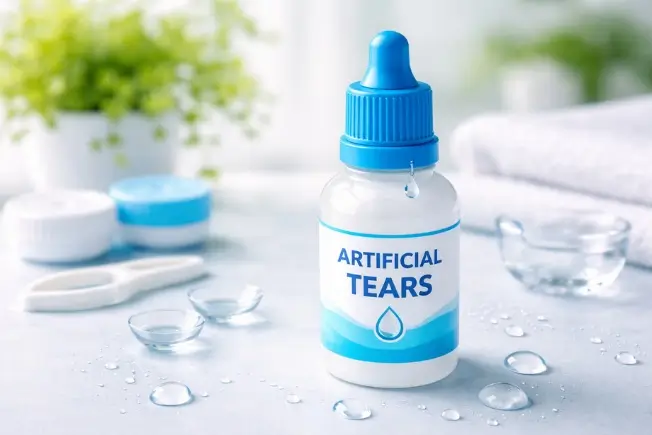
Artificial tears are specially formulated eye drops designed to mimic natural tears. They help lubricate the eyes' surface, providing relief from dryness, irritation, and discomfort.
Natural tears are made up of three layers:
Artificial tears aim to replicate these layers to maintain a healthy tear film and protect the eye surface.
Dry eyes occur when your eyes either
In this condition, your eyes fail to produce an adequate amount of the watery component of tears.
Why does this happen?
What does it feel like?
This usually happens due to issues in the oil layer of the tear film, which is responsible for preventing evaporation.
Common causes include:
Symptoms you may notice:
Artificial tears work by:
When your eyes lack moisture, the surface becomes rough, leading to discomfort and irritation. Artificial tears form a smooth, hydrating layer over the cornea, making your eyes feel refreshed immediately.
Every time you blink, your eyelids move across the eye surface. Without proper lubrication, this movement can cause friction, leading to irritation or a gritty sensation.
✔ Stabilizing the tear film
✔ Washing away debris and allergens
✔ Preventing dryness and irritation
They essentially act as a protective shield, keeping your eyes moist and comfortable throughout the day.
Not all artificial tears are the same. Choosing the right type depends on the severity of your symptoms and your lifestyle.
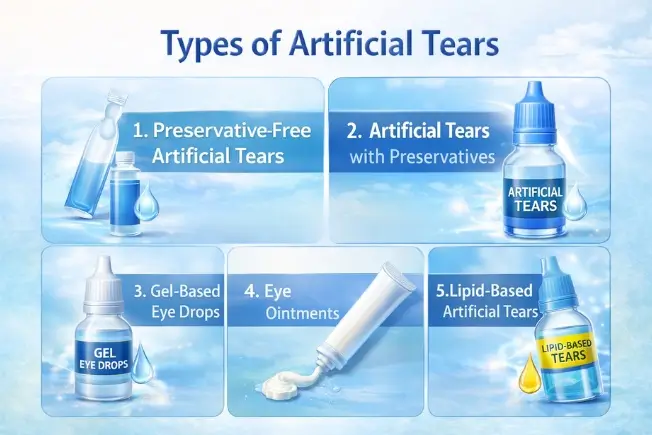
These are ideal for:
They come in single-use vials and are safer for long-term use.
However, overuse may cause irritation in some individuals.
Best used before bedtime due to temporary blurred vision.
These are specially designed for:
They help restore the oil layer of tears, reducing evaporation.
Artificial tears offer a wide range of benefits, especially for people dealing with chronic dryness.
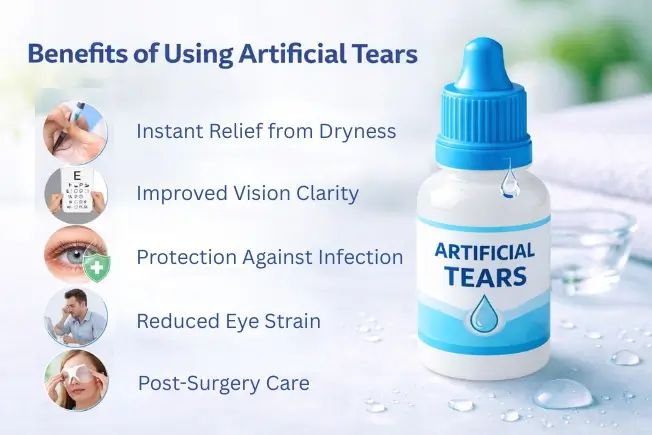
They quickly soothe irritation and discomfort.
Dry eyes can cause blurry vision. Lubrication improves focus.
By keeping the eye surface moist, they reduce the risk of infections.
Perfect for people who spend long hours on digital screens.
Commonly recommended after LASIK, cataract surgery, or other eye procedures.
Using artificial tears properly ensures maximum effectiveness.
1. Wash your hands thoroughly
2. Tilt your head back
3. Pull down the lower eyelid
4. Instill 1–2 drops into the eye
5. Close your eyes gently for a few seconds
6. Avoid touching the dropper tip to your eye
Preservative-free drops can be used more frequently without side effects.
With so many options available, selecting the right one can be confusing.
The first and most important factor is the severity of your dryness.
How often you need eye drops plays a major role in your selection.
✔ Presence of preservatives
Artificial tears come in two main categories:
With Preservatives
Preservative-Free
If you have chronic dry eye, preservative-free drops are always the better choice.
Yes, artificial tears are generally safe and well-tolerated.
Possible Side Effects (Rare):
If symptoms persist or worsen, visit an eye specialist.
Many people try home remedies like
While these can help, they do not replace the effectiveness of artificial tears.
Artificial tears are:
✔ Clinically tested
✔ Sterile and safe
✔ Designed for long-term relief
While artificial tears can manage mild to moderate dry eyes, consult a doctor if you experience the following:
These could indicate underlying conditions that require advanced treatment.
Artificial tears work best when combined with healthy habits.
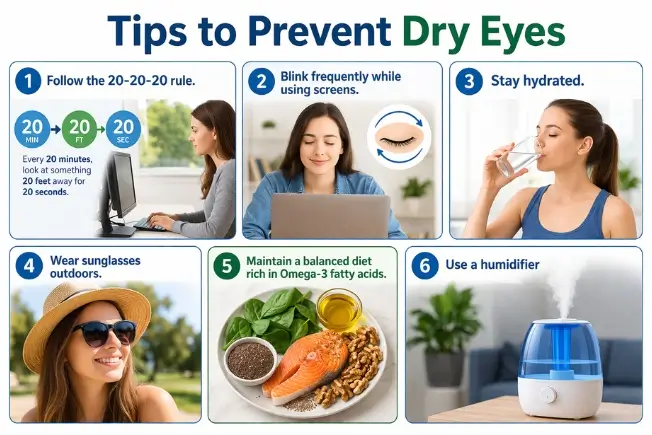
✔ Follow the 20-20-20 rule (every 20 minutes, look 20 feet away for 20 seconds)
✔ Blink frequently while using screens
✔ Stay hydrated
✔ Use a humidifier
✔ Wear sunglasses outdoors
✔ Maintain a balanced diet rich in Omega-3 fatty acids
In today’s digital age, screen exposure is unavoidable.
Artificial tears help reduce these symptoms by keeping the eyes lubricated during prolonged screen use.
After procedures like LASIK, the eyes may temporarily produce fewer tears.
Artificial tears:
✔ Promote healing
✔ Reduce discomfort
✔ Prevent dryness
✔ Improve visual recovery
Your doctor may recommend specific preservative-free drops for post-surgical care.
Artificial tears do not permanently cure dry eyes, but they effectively manage symptoms.
For long-term relief, treatment may include:
Yes, artificial tears are safe for daily use. Preservative-free artificial tears are recommended for frequent or long-term use, as they reduce the risk of irritation and are gentler on the eyes.
Yes, especially preservative-free formulations, which are designed for long-term use. However, if you need them very frequently (more than 4–6 times daily), it’s best to consult an eye specialist to identify the underlying cause of dryness.
Yes, but you should use contact lens-compatible artificial tears. These drops are specially formulated to keep lenses moist and comfortable without causing damage or blurred vision.
Most artificial tears can be used 2–4 times a day, or more if needed. Preservative-free drops can be used more frequently, depending on the severity of dryness.
The relief from artificial tears typically lasts from a few minutes to a few hours, depending on the type:
Artificial tears can temporarily improve vision clarity by lubricating the eye surface and stabilizing the tear film. However, they do not correct vision problems like near-sightedness or far-sightedness.
Artificial tears are designed specifically to lubricate and relieve dry eyes. Other eye drops may contain medications to treat conditions like:
So, not all eye drops are artificial tears.
Yes, artificial tears are highly effective for digital eye strain and screen-related dryness. They help maintain moisture and reduce irritation caused by prolonged screen use.
Artificial tears are generally very safe, but some people may experience:
Switching to preservative-free options usually resolves these issues.
Consult an eye specialist if:
This may indicate an underlying condition requiring treatment.
Copyright © 2025 | Save Sight Centre | All Rights Reserved.